 Free Shipping
 2-Year Warranty
 30-Day Money Back Guarantee



VOC Exposure at Home: What’s Harming Your Air?

Many homeowners focus on dust and odors when thinking about indoor air quality. Yet one of the most common concerns is VOC in home air. Volatile organic compounds, commonly called VOCs, are invisible gases released from everyday household products. These compounds can accumulate indoors, especially in tightly sealed homes, leading to noticeable odors and potential VOC symptoms.
Understanding where VOCs come from and how to reduce exposure is an important step in improving indoor environments. With the right strategy and a high-performance VOC air purifier like the Puraclenz Core, homeowners can significantly reduce airborne chemical pollutants inside their living spaces.
What Are VOCs?
Volatile organic compounds are carbon-based chemicals that easily evaporate at room temperature. Because they turn into gas so easily, they mix into indoor air quickly and often go unnoticed until odors or irritation appear.
Common indoor sources include:
- Paints, stains, and varnishes
- New furniture and flooring
- Cleaning products
- Air fresheners and scented candles
- Adhesives and sealants
- Pressed wood products
This process of releasing gases into the air is known as off gassing chemicals. It can continue for weeks or even months after a product is introduced into a home.

Why VOC in Home Air Is Increasing
Modern homes are built to be energy efficient. While that reduces heating and cooling costs, it also limits natural ventilation. As a result, VOC in home air can accumulate at higher concentrations than outdoor air.
Renovations can also spike VOC levels. Installing new cabinetry, repainting walls, or replacing flooring often introduces a surge of off gassing chemicals into enclosed spaces. Even something as simple as bringing home a new mattress can temporarily increase airborne chemical compounds.
Because these pollutants are invisible, many homeowners do not realize the air has changed until symptoms develop.
Common VOC Symptoms
Exposure to elevated VOC levels may contribute to a variety of discomforts. While sensitivity varies by individual, common VOC symptoms may include:
- Headaches
- Eye, nose, or throat irritation
- Dizziness
- Fatigue
- Increased sensitivity to odors
These reactions are often more noticeable in newly renovated spaces or rooms filled with new furnishings. If symptoms appear shortly after introducing new products, voc in home air may be a contributing factor.
Why Ventilation Alone Is Not Always Enough
Opening windows can temporarily dilute airborne pollutants. However, outdoor conditions are not always ideal. Humidity, outdoor pollutants, or seasonal allergens 4 can make ventilation less effective.
Additionally, ventilation does not actively remove chemicals from indoor air. It simply exchanges indoor air with outdoor air. For homes dealing with persistent off gassing chemicals, a more direct purification method may be necessary.
The Role of Activated Carbon in VOC Reduction
When addressing VOC in home air, filtration media matters. Traditional HEPA filters are excellent for capturing particles such as dust and allergens 4, but they are not designed to capture gases.
This is where an air purifier with activated carbon filter technology becomes important. Activated carbon contains millions of microscopic pores that adsorb gaseous pollutants. Instead of simply passing through the filter, VOC molecules adhere to the carbon surface.
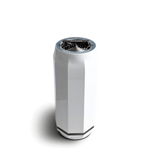
The Core is designed with 250 grams of activated carbon. This substantial carbon capacity allows it to adsorb off gassing chemicals more effectively and for longer periods compared to many standard filters. For homeowners specifically searching for an activated carbon air purifier, carbon weight and quality are critical factors.

Why the Puraclenz Core Is Built for VOC Concerns
The Core is engineered to address VOC in home air with a multi-layer purification approach. While its particle filtration captures airborne particulates, its robust carbon layer focuses on gaseous pollutants released through off gassing chemicals.
Unlike smaller units with minimal carbon pellets, the Core’s 250-gram carbon bed provides extended adsorption capacity. This means fewer frequent filter changes and more consistent reduction of airborne chemicals over time.
For households dealing with renovations, new furniture installations, or persistent indoor odors, the Core functions as a dedicated VOC air purifier rather than a basic particle-only device.
When Should You Use a VOC Air Purifier?
A VOC air purifier like the Core can be especially helpful in the following situations:
- After painting or remodeling
- When bringing new furniture into the home
- During seasonal deep cleaning
- In newly constructed homes
- In apartments with limited ventilation
Running an activated carbon air purifier continuously during high off gassing periods can help reduce airborne chemical concentrations more efficiently than intermittent use.
Building a VOC Education Hub at Home
Understanding VOC in home air is the first step toward long-term indoor air improvement. Education helps homeowners make better purchasing decisions, from low-VOC materials to selecting the right air purifier with activated carbon filter technology.
By combining source control, improved ventilation, and advanced filtration through the Core, households can significantly reduce the impact of off gassing chemicals and limit uncomfortable VOC symptoms.

A Smarter Approach to Indoor Air
VOCs are an often-overlooked contributor to indoor air quality concerns. Because they are invisible and odor may fade before compounds fully dissipate, many homeowners underestimate their presence.
Choosing an activated carbon air purifier designed specifically for gaseous pollutant adsorption is a practical step forward. The Puraclenz Core offers a focused solution for managing VOC in home air, especially during periods of heavy off gassing chemicals.
For anyone building a cleaner indoor environment, understanding VOC sources and using a properly designed VOC air purifier can make a measurable difference in everyday comfort.
Recommended products

Core Air & Surface Purifier + HEPA
$649.99

