 Free Shipping
 2-Year Warranty
 30-Day Money Back Guarantee



How VOCs Build Up Indoors When You Keep Windows Closed

As summer winds down and cooler weather approaches, many households begin spending more time indoors with the windows closed. While this helps keep your home comfortable, it can also reduce the amount of fresh outdoor air circulating through your living spaces.
With less ventilation, everyday indoor pollutants can become more concentrated. One important category is volatile organic compounds (VOCs), which can be released by furniture, paints, cleaning products, flooring, adhesives, fragrances, and other common household materials.
Understanding how VOCs build up indoors can help you make better decisions about source control, ventilation, and air purification as you prepare your home for fall.

What Are VOCs?
Volatile organic compounds, or VOCs, are chemicals that can become airborne under normal indoor conditions. Because they are released by many everyday products and materials, VOCs are a common indoor air quality concern.
Common sources of VOCs in the home include:
- Paints, coatings, and finishes
- Adhesives and glues
- Furniture and composite wood products
- Cleaning products
- Air fresheners and fragrances
- Solvents and hobby supplies
- New carpets and flooring
- Building and remodeling materials
The process of chemicals being released from products and materials into the surrounding air is commonly known as off-gassing.
A new sofa, freshly painted room, recently installed flooring, or new cabinetry may release additional airborne chemicals. Some materials can continue emitting VOCs even after the initial odor fades.
Why Do VOCs Build Up When Windows Are Closed?
During warmer months, open windows and doors can provide regular outdoor-air exchange. Once temperatures begin to drop, however, many households keep their windows closed for longer periods.
When less outdoor air enters the home, indoor pollutants have fewer opportunities to disperse. At the same time, everyday activities continue to introduce airborne chemicals.
Cooking, cleaning, personal-care products, fragrances, hobbies, furniture, flooring, and household materials can all contribute to indoor VOC levels. In a home with limited ventilation, these pollutants may accumulate more easily.
This is why indoor VOCs can become a greater consideration during the transition from summer to fall.
Opening windows is not always the answer. Temperature, humidity, wildfire smoke, pollen, and other outdoor air quality conditions can affect whether ventilation makes sense. A more complete indoor air strategy combines source control, appropriate ventilation, and air purification.
Where Do VOCs and Indoor Chemicals Come From?
Indoor chemicals can originate from many areas of the home, and the sources are not always obvious.
A home office, for example, may contain furniture, electronics, adhesives, flooring, and cleaning products. Bedrooms can include mattresses, furniture, fragrances, and carpeting. Kitchens can introduce airborne compounds through cooking, cleaners, and household products.
Because there may be several sources throughout the home, reducing indoor VOC concentrations often requires a broader approach rather than focusing on one room or product.
Start by identifying products and materials that may be contributing to indoor chemicals. Follow product-use instructions, provide appropriate ventilation when using products with strong fumes, and store household chemicals according to their labels.
Source control is an important first step. Reducing the amount of VOCs released indoors means there is less pollution for ventilation and air purification systems to manage afterward.
What Is Off-Gassing?
Off-gassing is the release of airborne chemicals from certain materials and household products.
It is often most noticeable after bringing something new into the home. New furniture, flooring, cabinets, mattresses, paint, and building materials may produce noticeable odors as compounds are released into the air.
However, smell alone is not a reliable measure of indoor air quality. Some VOCs have noticeable odors, while others may be difficult or impossible to detect by smell.
Instead of relying only on odor, consider the products and materials inside your home, how recently they were installed or purchased, and how much ventilation and air purification are available.
Can an Air Purifier Help With VOCs?
Air purification can be one part of a broader strategy for managing VOCs indoors, but the type of filtration matters.
Traditional particle filters are designed primarily to capture airborne particles such as dust, pollen, and pet dander. VOCs, however, are gaseous pollutants, so households concerned about chemicals and odors should consider filtration technologies designed to address gases.
An air purifier with activated carbon filtration can help address certain gaseous compounds and household odors. Activated carbon provides a different function than particle filtration, making it especially relevant when VOCs are a concern.
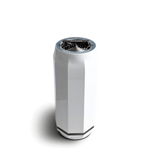
Puraclenz Core combines multiple indoor air purification technologies, including activated carbon, True HEPA filtration, PCO, and UV-C. Puraclenz lists VOCs, odors, smoke, dust, pollen, pet dander, and other pollutants among the indoor air concerns the Core is designed to address.
The Core's activated carbon filtration is particularly relevant for VOCs, smoke, and odors, while its True HEPA filter is designed to trap airborne particulate matter. Puraclenz also uses PCO technology, a light-powered process designed to help break down pollutants in the air and on surfaces.
For households searching for a VOC air purifier, a system that combines gas filtration with particle filtration can provide a more comprehensive approach than particle filtration alone.
6 Ways to Reduce VOC Buildup Before Fall
As you begin spending more time indoors, these practical steps can help reduce the buildup of VOCs and other indoor pollutants.
1. Identify Potential VOC Sources
Walk through your home and look for products or materials that may release airborne chemicals. Pay particular attention to new furniture, flooring, paint, cleaning products, fragrances, adhesives, and hobby supplies.
2. Follow Product Instructions
When using paints, cleaners, adhesives, solvents, or other chemical-containing products, follow the manufacturer's instructions for ventilation, application, storage, and safe use.
3. Ventilate When Outdoor Conditions Allow
Opening windows can increase outdoor-air exchange when weather and outdoor air quality are appropriate. Even short periods of ventilation may help move stale indoor air outside.
During colder weather, however, windows are often closed more frequently, making source control and indoor air purification increasingly important.
4. Use Activated Carbon Filtration
If VOCs, smoke, or household odors are a concern, look for an air purifier that includes activated carbon rather than relying exclusively on particle filtration.
An activated carbon air purifier provides a filtration layer specifically intended to address certain gaseous pollutants and odors.
5. Keep Indoor Air Circulating
Using your home's HVAC system appropriately can help circulate indoor air through available filtration. Portable air purification can provide an additional option for continuous air cleaning in frequently occupied rooms.
6. Replace Air Purifier Filters as Recommended
Air purification equipment performs best when filters and other replaceable components are maintained according to the manufacturer's recommendations.
Puraclenz recommends replacing the Core filter approximately every four to six months, depending on the air quality of the installation space and assuming continuous use.
How to Prepare Your Indoor Air for Fall
Late summer is a good time to think about how your indoor environment will change once cooler weather arrives and windows remain closed for longer periods.
Take inventory of potential VOC sources before fall. Consider whether you have recently purchased furniture, installed new flooring, painted a room, completed renovations, or introduced new household products.
It is also worth considering how much ventilation your home receives once temperatures drop and whether your existing filtration system addresses both particles and gaseous pollutants.
For additional indoor air purification, Puraclenz Core combines True HEPA filtration, activated carbon, PCO, and UV-C technologies in one system. It is designed for continuous operation and lists VOCs and odors among the indoor pollutants it addresses.

Final Thoughts: Managing VOCs in a Closed Home
VOCs can become more concentrated indoors as households transition from open-window summer living to closed-window fall routines. These airborne chemicals can come from everyday products, furniture, flooring, cleaning supplies, fragrances, paints, and other materials throughout the home.
A practical indoor air strategy starts with reducing VOC sources where possible, ventilating when outdoor conditions allow, and choosing air purification technologies suited to the pollutants you want to address.
If VOCs and odors are among your indoor air concerns, an air purifier with activated carbon filtration can be a useful part of your fall indoor air quality strategy.
Recommended products

Core Air & Surface Purifier + HEPA
$649.99
Recommended articles

