 Free Shipping
 2-Year Warranty
 30-Day Money Back Guarantee



Do Air Purifiers Remove Wildfire Smoke Particles?
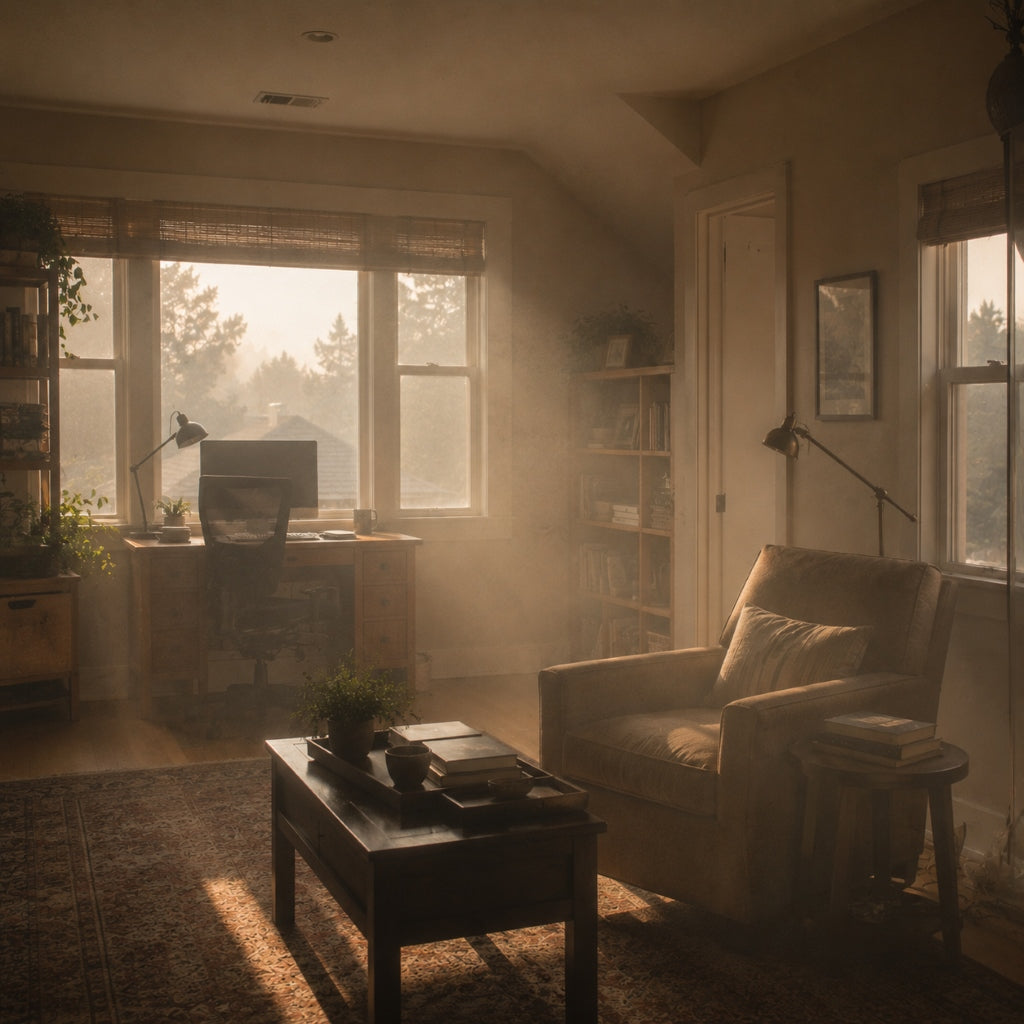
Wildfire smoke can travel hundreds or even thousands of miles from an active fire, affecting indoor air quality far beyond the immediate burn area. Even when windows and doors are closed, microscopic smoke particles can enter through ventilation systems, small air leaks, and everyday movement in and out of the home.
This leads many homeowners to ask an important question: Can an air purifier for wildfire smoke actually remove smoke particles from indoor air?
The answer is yes, when the purifier includes the right filtration technologies and is appropriately sized for the space. A well-designed air purifier for smoke can capture airborne particles, reduce smoke-related odors, and help maintain cleaner indoor air during wildfire events.
What Is in Wildfire Smoke?
Wildfire smoke is not a single pollutant. It is a complex mixture of fine particles, gases, odors, ash, and volatile organic compounds, commonly called VOCs.
One of the biggest indoor air concerns is fine particulate matter known as PM2.5. These particles are approximately 2.5 micrometers in diameter or smaller. Because they are so small, they can remain suspended in the air for long periods and travel deep into homes through gaps, ventilation systems, and open doors.
Wildfire smoke may introduce several types of indoor pollutants, including:
- Fine airborne smoke particles
- Ash and soot
- Smoke-related odors
- Volatile organic compounds
- Dust and outdoor debris carried indoors
Visible haze may disappear relatively quickly, but smaller particles and odors can continue circulating or settle onto furniture, carpets, curtains, and other household surfaces.

Can an Air Purifier Remove Smoke Particles?
An air purifier can help remove smoke particles when it uses a high-efficiency particle filter, such as a True HEPA filter. As indoor air is pulled through the purifier, airborne particles become trapped within the filter instead of continuing to circulate throughout the room.
However, smoke contains more than particles. This is why the most effective smoke filtration systems typically combine more than one purification method.
A smoke-focused air purifier should ideally include:
- True HEPA filtration for fine airborne particles
- Activated carbon filtration for smoke odors and VOCs
- A pre-filter for larger dust, ash, and debris
- Air quality monitoring for changes in particle levels
- Continuous operation for ongoing indoor air circulation
True HEPA and activated carbon perform different jobs. HEPA filtration captures particles, while activated carbon helps reduce certain odors and gases associated with smoke. Combining the two provides broader support during wildfire events.
Why True HEPA Filtration Matters for Wildfire Smoke
True HEPA filtration is one of the most important features to consider when choosing an air purifier wildfire smoke solution. These filters are designed to capture extremely small particles as air passes through the purifier.
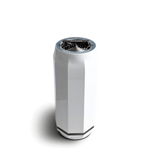
The Puraclenz Core uses an H13 True HEPA filter designed to trap 99.97% of dust, pollen, pet dander, allergens, bacteria3, and mold1 down to 0.1-micron particle sizes.
Because wildfire smoke contains a high concentration of fine particulate matter, a high-efficiency filter can help reduce the amount of airborne smoke circulating indoors. The filter must still receive adequate airflow, however, which is why purifier placement, fan speed, coverage, and operating time also matter.
Why Activated Carbon Is Important for Smoke Odors
A particle filter alone may not fully address the smell of wildfire smoke. Smoke can also contain gaseous pollutants and VOCs that pass through a standard mechanical particle filter.
Activated carbon is designed to adsorb certain gases, VOCs, and odor-causing compounds as air moves through the filtration system. This makes activated carbon an important companion to HEPA filtration in a smoke air purifier.
The same combination is often considered by people searching for the best air purifier for cigarette smoke. While wildfire smoke and cigarette smoke come from different sources, both can contain fine particles, odors, and gaseous pollutants. In either situation, HEPA filtration addresses airborne particles while activated carbon provides additional support for odors and VOCs.
How the Puraclenz Core Addresses Wildfire Smoke
The Core is an all-in-one air and surface purification system designed to address smoke, odors, dust, allergens4, VOCs, and other common indoor pollutants.
Its multi-stage purification system combines:
- Pre-filtration for larger airborne particles
- H13 True HEPA filtration
- Activated carbon filtration
- Germicidal UV-C technology
- Patented Photocatalytic Oxidation technology
The True HEPA filter traps fine particles that pass through the unit, while the activated carbon layer helps reduce smoke odors and VOCs. The Core also measures indoor air quality using PM2.5 monitoring, allowing the system to detect changes in airborne particle concentrations.
This can be particularly useful during wildfire season because indoor smoke levels may change throughout the day as outdoor conditions, wind direction, HVAC operation, and household activity change.
The Core is designed for continuous operation, helping air move repeatedly through the filtration system instead of relying on occasional purification sessions.
What to Look for in the Best Air Purifier for Smoke
The best air purifier for smoke is not necessarily the purifier with the longest feature list. It should combine effective particle filtration with enough airflow and coverage for the intended space.
When comparing smoke air purifiers, consider the following features:
True HEPA Filtration
Look for a purifier that clearly identifies its filter as True HEPA. This is the primary filtration stage responsible for capturing fine airborne smoke particles.
Activated Carbon
Activated carbon helps reduce smoke odors and certain gaseous pollutants that particle filtration alone may not capture.
Appropriate Room Coverage
A purifier must circulate enough air for the room where it is operating. A small desktop purifier may provide limited support in a large living room or open floor plan.
Air Quality Monitoring
PM2.5 monitoring can help identify rising indoor particle levels and allow the purifier to respond as conditions change.
Continuous Operation
Smoke can continue entering the home throughout an outdoor air quality event. A purifier designed for ongoing use provides more consistent filtration than one that is only operated periodically.
Reasonable Noise Levels
Because air purifiers may need to run for extended periods, especially overnight, noise level can affect whether the unit is used consistently.
Where Should You Place an Air Purifier During Wildfire Smoke?
Place the purifier in the room where household members spend the most time. This may be a living room during the day and a bedroom at night.
For better airflow:
- Keep the purifier away from curtains and furniture that could block its intake or outlet
- Avoid placing it tightly against a wall unless the manufacturer permits it
- Keep interior doors open when attempting to circulate air between connected spaces
- Use additional units in separate closed rooms when necessary
- Run the purifier continuously while outdoor smoke conditions remain elevated
In larger or divided homes, one purifier may not move air effectively through every closed room. Prioritize high-use areas or create a dedicated clean-air room during severe smoke events.
How to Create a Cleaner-Air Room
A cleaner-air room is a designated room where outdoor smoke infiltration and indoor particle generation are kept as low as practical. A bedroom or interior living space with limited exterior doors and windows may work well.
To create one:
- Keep windows and exterior doors closed
- Run a properly sized air purifier continuously
- Limit candles, frying, smoking, and other particle-generating activities
- Use HVAC recirculation when appropriate for the system
- Replace dirty HVAC and purifier filters as needed
- Reduce unnecessary traffic in and out of the room
A clean-air room can be especially helpful for sleeping, working from home, or spending extended periods indoors during a heavy smoke event.
Additional Ways to Reduce Wildfire Smoke Indoors
An air purifier should be part of a broader wildfire smoke plan rather than the only protective step.
Additional ways to reduce indoor smoke include:
- Keeping windows and doors closed when outdoor air quality is poor
- Checking weather stripping and sealing obvious air leaks
- Setting compatible HVAC systems to recirculate indoor air
- Replacing HVAC filters regularly
- Avoiding indoor activities that create additional smoke or particles
- Cleaning settled dust and ash with a damp cloth rather than dry dusting
- Monitoring local outdoor air quality reports
- Checking purifier filters more frequently during prolonged smoke events
Filters may load more quickly when particle concentrations are high. Follow the purifier manufacturer’s replacement guidance and inspect filters during extended wildfire conditions.

Frequently Asked Questions
Do air purifiers completely eliminate wildfire smoke?
No air purifier can prevent all outdoor smoke from entering a home. However, a properly sized purifier with True HEPA and activated carbon filtration can significantly reduce airborne particles and help control smoke-related odors indoors.
Will a HEPA filter remove the smell of smoke?
A HEPA filter primarily captures particles. Activated carbon filtration is generally needed to provide additional reduction of smoke odors, VOCs, and certain gaseous pollutants.
Should an air purifier run all day during wildfire smoke?
Continuous operation is generally more effective during an active smoke event because particles may continue entering the home. Use the highest practical fan setting when indoor particle levels are elevated, then reduce the speed as conditions improve.
Can one air purifier clean an entire house?
Performance depends on the purifier’s airflow, coverage area, floor plan, ceiling height, and whether interior doors are open or closed. Larger or divided homes may require more than one unit to provide effective filtration in separate rooms.
Is a smoke air purifier useful after the outdoor air clears?
Yes. Fine particles and odors may remain indoors after the outdoor haze disappears. Continuing to operate the purifier can help filter residual airborne particles while surfaces and fabrics are cleaned.
Conclusion
Air purifiers can remove wildfire smoke particles from indoor air when they include effective particle filtration and are used correctly. True HEPA filtration captures fine airborne particles, while activated carbon helps reduce smoke-related odors and VOCs.
For homeowners researching an air purifier wildfire smoke solution, the most practical approach is to choose a system that combines multiple purification technologies, provides sufficient airflow for the intended space, and can operate continuously as smoke conditions change.
The Puraclenz Core combines H13 True HEPA, activated carbon, UV-C, and patented PCO technology with PM2.5 air quality monitoring. Together, these technologies provide comprehensive support for smoke particles, odors, VOCs, dust, allergens4, and other indoor air quality concerns throughout wildfire season.
Recommended products

Core Air & Surface Purifier + HEPA
$649.99
Recommended articles

