 Free Shipping
 2-Year Warranty
 30-Day Money Back Guarantee



Can Your HVAC System Spread Mold Throughout Your Home?
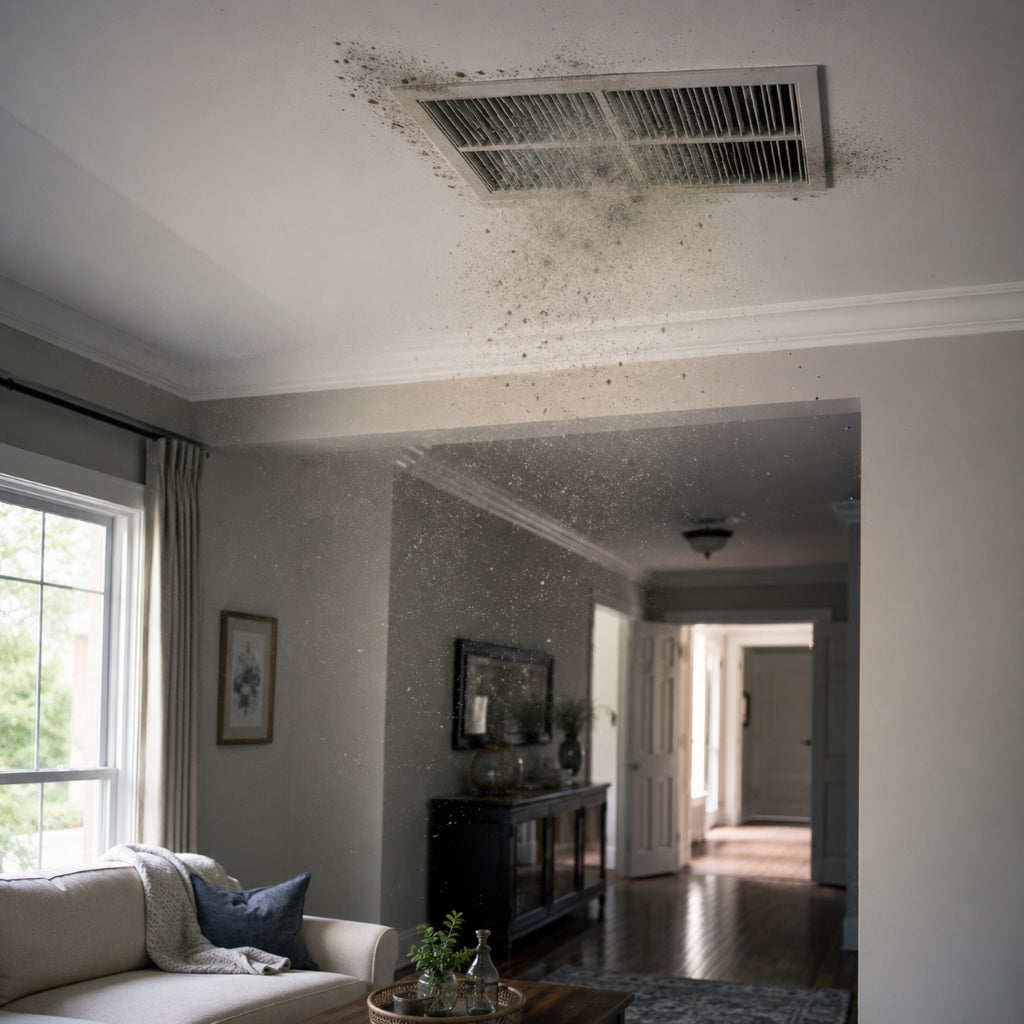
Indoor air quality often starts with your HVAC system. It circulates conditioned air through every room, helping maintain comfort year-round. But if moisture builds up inside the system, it can also become a place where mold 1 may develop. Once airflow begins, many homeowners wonder whether their HVAC system can spread mold 1 throughout the house.
The short answer is that an HVAC system can circulate mold 1 spores if contamination is present within components such as the evaporator coil, drip pan, blower compartment, or ductwork. Understanding how this happens and how to reduce the conditions that allow it can help improve your home's indoor environment.
If you're researching whether your HVAC spread mold concerns are valid, here's what you should know.
Can an HVAC System Really Spread Mold 1?
Yes. While your HVAC system does not create mold 1, it can move airborne mold 1 spores through your home's duct system if contamination is already present.
Mold 1 spores naturally exist both indoors and outdoors. When excess moisture combines with dust and organic debris inside HVAC equipment, spores may settle and multiply on damp surfaces.
Common areas where mold 1 may develop include:
- Evaporator coils
- Condensate drain pans
- Air handler cabinets
- Supply and return ducts
- Flexible duct insulation
- Dirty HVAC filters
As air circulates, loose spores may travel into occupied living spaces.
This is why HVAC mold contamination should be addressed promptly whenever moisture issues are discovered.

What Causes Mold 1 Growth Inside HVAC Systems?
Several conditions contribute to microbial growth inside heating and cooling equipment.
Excess Humidity
When indoor humidity remains above approximately 60%, moisture can accumulate on HVAC components and other surfaces throughout the home.
Condensation
Air conditioners naturally remove moisture from indoor air. If drain lines clog or condensate pans overflow, standing water creates favorable conditions for mold 1 growth.
Dirty Filters
Clogged filters reduce airflow while allowing dust and organic particles to collect on internal components.
Poor Maintenance
Routine inspections help identify moisture issues before contamination becomes more widespread.
Signs Your HVAC May Have Mold 1
While only professional inspection can confirm contamination, homeowners often notice warning signs such as:
- Musty odors when the system starts
- Odors strongest near supply vents
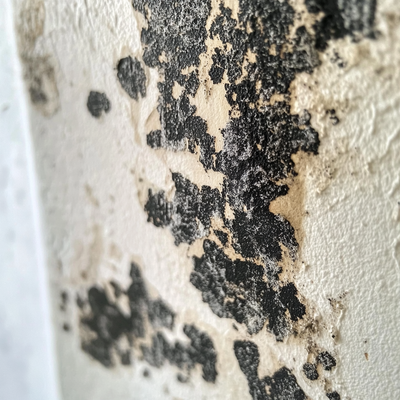
- Visible mold 1 around vents or registers
- Moisture around indoor HVAC equipment
- Frequent condensation
- Discolored insulation inside ductwork
These signs don't always indicate widespread contamination, but they warrant further evaluation.
Can Duct Mold 1 Spread Throughout the House?
One of the biggest concerns homeowners have is duct mold.
If mold 1 develops inside sections of ductwork, airflow may carry spores throughout the home's ventilation system. However, contamination is often localized to areas where moisture has been present.
Professional duct inspection helps determine:
- Whether contamination exists
- The extent of affected ductwork
- Whether cleaning or replacement is appropriate
- Whether moisture problems remain unresolved
Simply cleaning visible mold 1 without correcting the moisture source often allows growth to return.
How Moisture Problems Lead to HVAC Mold 1 Contamination
HVAC systems constantly move warm and cool air, creating opportunities for condensation.
Common moisture sources include:
- Poor attic insulation
- Leaking duct connections
- Blocked condensate drains
- Oversized air conditioning systems
- High indoor humidity
- Water leaks near HVAC equipment
Addressing these issues helps reduce the conditions that support microbial growth.
How Puraclenz Photon Complements HVAC Maintenance
Routine HVAC maintenance remains the first step toward addressing contamination inside heating and cooling equipment. In addition, homeowners may use air purification technology to help reduce pollutants that have entered occupied living spaces.
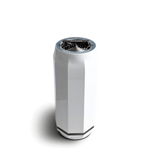
The Photon is a portable air and surface purifier that operates independently from your HVAC system. It does not attach to ductwork or require professional HVAC installation. The compact unit can be placed on a tabletop or other suitable surface and can also be mounted on a wall or ceiling using the included mounting kit.
Photon uses light-powered Photocatalytic Oxidation (PCO) technology to continuously generate ions. These ions disperse beyond the purifier and interact with pollutants throughout the treated space, helping reduce mold 1, mildew 1, viruses 2, bacteria 3, allergens 4, and odors in the air and on exposed surfaces.
Unlike filtration-only technologies that depend on pollutants passing through a filter, Photon's active PCO purification works beyond the purifier itself. This allows its ions to reach pollutants in the surrounding air and on exposed surfaces and fabrics, including areas that may be difficult for traditional filtration to address.
Photon can complement an existing HVAC filter, portable HEPA purifier, or professional HVAC maintenance plan by adding active air and surface purification to the rooms where it operates.
Can an Air Purifier Help with Mold 1?
Air purifiers can help reduce airborne mold 1 spores as they circulate through indoor spaces. Some technologies, including Puraclenz PCO, can also help reduce pollutants in the air and on exposed surfaces.
However, even the best air purifier for mold 1 cannot remove the moisture source that allows mold 1 to grow. Air purification should be used alongside moisture control, leak repairs, humidity management, and professional remediation when necessary.
In other words, air purifiers for mold can support cleaner indoor air, but they do not replace correcting the underlying conditions responsible for microbial growth.
For best results:
- Fix leaks promptly.
- Control indoor humidity.
- Replace HVAC filters regularly.
- Schedule routine HVAC inspections.
- Address condensation issues.
- Use continuous air purification in affected living spaces.
Choosing the Best Air Purifier for Mold 1
If you're researching the best air purifier for mold 1 or best air purifiers for mold 1, look beyond filtration alone.
Important considerations include:
- Coverage for the intended space
- Continuous operation
- Air and surface purification capabilities
- Placement flexibility
- Maintenance requirements
- Compatibility with existing filtration systems
The Photon provides PCO air and surface purification for spaces up to 3,000 square feet. Its compact, portable design allows for tabletop, wall, or ceiling placement without connecting the purifier to the home's HVAC system.
Photon does not use a HEPA filter. Instead, it can complement an existing HEPA purifier or HVAC filter by generating ions that disperse throughout the treated space to help reduce pollutants in the air and on exposed surfaces.
Where Should You Place Puraclenz Photon?
Because Photon operates independently from the HVAC system, it should be placed in the area where purification is needed rather than inside or directly attached to heating and cooling equipment.
Suitable locations may include:
- Living rooms
- Bedrooms
- Finished basements
- Home offices
- Kitchens and open-concept spaces
- Rooms affected by musty odors or recurring humidity
Photon's 360-degree air intake and flexible placement options allow it to operate continuously without requiring modifications to the home's ductwork.

Tips for Reducing HVAC Mold 1 Risks
You can lower the likelihood of HVAC contamination by following a few maintenance practices:
- Change HVAC filters on schedule.
- Keep indoor humidity between 30% and 50%.
- Have condensate drains inspected regularly.
- Repair water leaks promptly.
- Schedule annual HVAC maintenance.
- Inspect ductwork if musty odors persist.
- Keep vents clean and unobstructed.
- Use air purification to help reduce pollutants that enter occupied spaces.
These steps help reduce the conditions that allow mold 1 growth while supporting cleaner air throughout the home.
Final Thoughts
An HVAC system can circulate mold 1 spores when microbial contamination develops inside the equipment or ductwork. While HVAC systems don't create mold 1, moisture problems combined with accumulated dust can provide favorable conditions for growth.
Addressing moisture sources and maintaining your HVAC equipment are essential steps. Air purification can then help reduce pollutants that have entered occupied living spaces.
Puraclenz Photon operates separately from the HVAC system, using PCO technology to generate ions that disperse throughout the treated area. These ions help reduce pollutants in the air and on exposed surfaces, allowing Photon to complement HVAC filtration, routine maintenance, and professional mold 1 remediation.
If you're concerned about HVAC spread mold, combining moisture control, professional HVAC maintenance, appropriate filtration, and active air and surface purification offers a more comprehensive approach to improving your indoor environment.
Recommended products

Photon Air & Surface Purifier
$399.99

