 Free Shipping
 2-Year Warranty
 30-Day Money Back Guarantee


Best Air Purifier for Wildfire Smoke in 2026: What to Look For
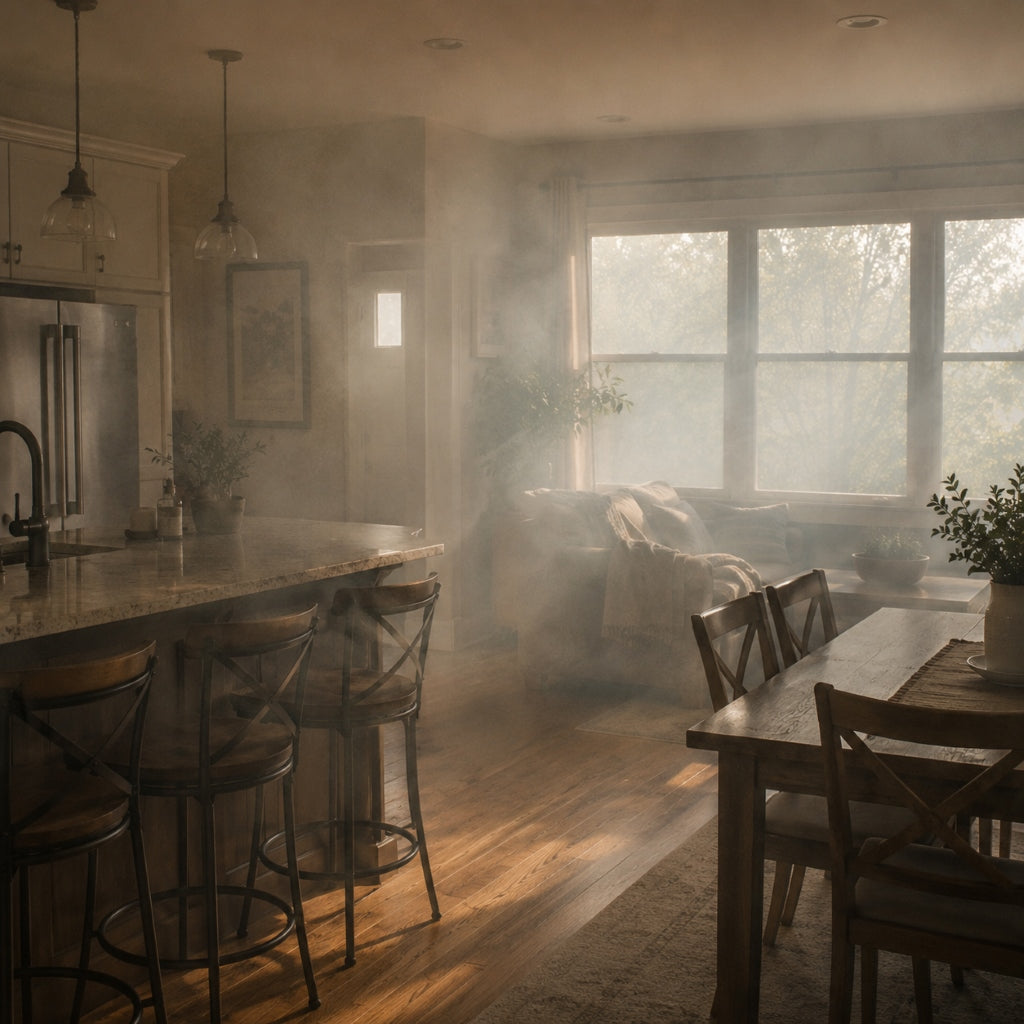
Wildfire smoke can travel hundreds or even thousands of miles from an active fire, bringing fine particles, smoke odors, and other airborne pollutants into your home. When outdoor air quality deteriorates, an air purifier can be an important part of helping maintain cleaner indoor air.
If you are looking for the best air purifier for wildfire smoke, focus on more than just the brand or price. HEPA filtration, activated carbon, room coverage, operating noise, air-quality monitoring, and maintenance requirements can all affect how well an air purifier fits your home.
This 2026 buying guide explains what to look for in a wildfire smoke air purifier, why HEPA and activated carbon matter, and how the Puraclenz Core combines multiple purification technologies for homeowners concerned about smoke and other indoor-air pollutants.
What Should You Look for in an Air Purifier for Wildfire Smoke?
Wildfire smoke contains extremely small airborne particles that can enter homes through doors, windows, ventilation systems, and other openings. Smoke can also leave behind persistent odors and introduce gaseous pollutants into indoor spaces.
When comparing air purifiers for wildfire smoke, look for:
- True HEPA filtration for airborne particles
- Activated carbon for smoke-related odors and gases
- Coverage appropriate for your space
- Continuous operation during prolonged smoke events
- Indoor air-quality monitoring
- Low-noise operation for bedrooms and living spaces
- Simple filter maintenance
- Additional purification technology beyond mechanical filtration
The right combination will depend on the size and layout of your home, how frequently wildfire smoke affects your area, and which indoor-air concerns you want to address.

Why HEPA Filtration Matters for Wildfire Smoke
True HEPA filtration should be one of the first features you consider when choosing an air purifier for wildfire smoke.
HEPA filters are designed to capture airborne particles as air moves through the purifier. The Puraclenz Core uses an H13 True HEPA filter that traps 99.97% of dust, pollen, pet dander, allergens 4, bacteria 3, and mold 1 down to 0.1 micron-sized particles.
Because wildfire smoke contains fine airborne particles, mechanical filtration is an important part of managing smoke-related indoor air quality.
However, particles are only one part of wildfire smoke. Smoke can also produce strong odors and gaseous pollutants, which is why it is useful to consider purification technologies beyond HEPA filtration alone.
Activated Carbon Helps Address Smoke Odors
If wildfire smoke leaves your home smelling smoky even after outdoor conditions improve, activated carbon is another important feature to look for.
Activated carbon is commonly used in air purifiers to help address odors and certain gaseous pollutants that particle filters are not designed to capture.
The Core combines H13 True HEPA filtration and activated carbon with PCO technology and UV-C, giving homeowners multiple purification technologies within one system.
That combination can be especially useful when you are looking for an air purifier for smoke and odors rather than a system focused only on airborne particles.
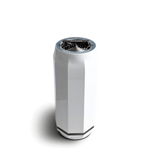
Puraclenz Core: An Air Purifier for Wildfire Smoke
For homeowners looking for broader air and surface purification, the Puraclenz Core combines four purification technologies in one floor-standing unit:
- PCO purification
- H13 True HEPA filtration
- Activated carbon
- UV-C
The Core provides PCO coverage of up to 3,000 square feet and HEPA filtration coverage of up to 1,575 square feet. Actual performance can vary depending on room layout, airflow, operating conditions, and other factors.
It is also designed for continuous operation and includes indoor air-quality monitoring. Night Mode operates as quietly as 23 dB on its lowest setting, making it suitable for bedrooms, living rooms, and other frequently used areas.
For homeowners dealing with wildfire smoke alongside everyday concerns such as odors, dust, pollen, and VOCs, the Core combines several purification technologies within a single system.
Why Consider Purification Beyond HEPA?
A HEPA filter captures particles from air that moves through the purifier. That makes airflow and filtration an essential part of reducing airborne particles indoors.
The Core also incorporates PCO purification. Puraclenz describes its PCO technology as a light-powered process designed to break down pollutants in the air and on surfaces.
This gives homeowners an additional purification method alongside mechanical filtration.
For wildfire season, a system that combines HEPA filtration, activated carbon, and additional purification technology can help address several different aspects of indoor air quality rather than relying on one technology alone.
Choose the Right Air Purifier Coverage for Your Home
Coverage area is one of the most important factors when comparing air purifiers, especially if wildfire smoke is affecting multiple rooms.
A purifier designed for a small bedroom may not provide the coverage you want for a large living room, open floor plan, or broader section of your home.
Before buying, compare the manufacturer's stated coverage with the size of the area where you plan to operate the purifier.
The Core provides up to 1,575 square feet of HEPA filtration coverage and up to 3,000 square feet of PCO coverage.
For larger spaces, broader coverage may be more convenient than relying on several smaller purification units throughout the home.
Continuous Operation Can Help During Wildfire Smoke Events
Wildfire smoke conditions can change quickly throughout the day. Even when windows and doors remain closed, outdoor air can still enter a home through normal air exchange and other openings.
Because smoke exposure can continue for hours or days, many homeowners prefer an air purifier that can run continuously.
The Core is designed for 24/7 operation, allowing the system to continue reducing pollutants as indoor conditions change.
Continuous use also makes regular filter maintenance particularly important.
Check and Replace Air Purifier Filters Regularly
No air purifier can perform as intended if its filtration system is not properly maintained.
For the Puraclenz Core, the filter should be replaced every 4–6 months, depending on the air quality of the installation space and assuming continuous 24/7 operation. Indicator lights notify users when the filter requires attention.
During periods of heavy wildfire smoke, filters may load more quickly than they would under typical indoor-air conditions, so checking the filter periodically during prolonged smoke events is recommended.
Wildfire Smoke vs. Cigarette Smoke: What Should You Look For?
Wildfire smoke and cigarette smoke come from different sources, but many of the same air-purifier features are useful when evaluating systems for either type of smoke.
If you are looking for an air purifier for cigarette smoke, consider:
- True HEPA filtration for airborne particles
- Activated carbon for smoke odors
- Coverage appropriate for the room
- Continuous operation
- Operating noise
- Filter replacement requirements
The Core combines H13 True HEPA filtration and activated carbon with PCO and UV-C technologies, making it an option for homes where smoke is one of several indoor-air concerns.
How to Compare Wildfire Smoke Air Purifiers
Customer reviews can be helpful when researching an air purifier, but they should not be the only factor you consider. Product specifications can tell you much more about whether a purifier is appropriate for your home.
1. HEPA Filtration
Look for True HEPA filtration and review what the manufacturer says the filter is designed to capture.
2. Activated Carbon
If smoke odors are a concern, look for activated carbon or another technology specifically designed to help address odors and gaseous pollutants.
3. Coverage Area
Compare the manufacturer's stated coverage with the size and layout of the room or area where you plan to use the purifier.
4. Operating Noise
If your purifier will run continuously, noise can make a significant difference. Lower operating noise can make a purifier easier to use in bedrooms, home offices, and living rooms.
5. Filter Maintenance
Check how often filters need to be replaced, how much replacements cost, and whether the purifier includes a filter-change indicator.
6. Additional Purification Technologies
Some air purifiers rely primarily on filtration, while others combine filtration with technologies such as PCO or UV-C. Understanding how a system works can help you choose one that better fits your indoor-air priorities.
How to Keep Wildfire Smoke Out of Your Home
An air purifier should be part of a broader strategy for managing indoor air during wildfire smoke events.
When outdoor smoke levels increase:
- Keep windows and doors closed when practical.
- Limit unnecessary outdoor-air entry.
- Run your air purifier continuously according to the manufacturer's instructions.
- Check filters regularly and replace them when needed.
- Monitor indoor air quality when possible.
- Consider creating a cleaner-air room where household members can spend more time during heavy smoke.
- Avoid indoor activities that produce additional airborne pollutants.
An air purifier does not prevent smoke from entering your home, so reducing outdoor-air infiltration remains an important part of protecting indoor air quality during wildfire events.

Is the Puraclenz Core the Best Air Purifier for Wildfire Smoke?
There is no single air purifier that is automatically the best choice for every home. Your ideal system will depend on your home's size, room layout, filtration preferences, noise tolerance, maintenance requirements, and budget.
For homeowners looking for a system that combines H13 True HEPA filtration, activated carbon, PCO purification, and UV-C, the Core is a strong option to consider.
Its listed specifications include:
- Up to 1,575 square feet of HEPA filtration coverage
- Up to 3,000 square feet of PCO coverage
- Continuous 24/7 operation
- Indoor air-quality monitoring
- Night Mode as quiet as 23 dB
- H13 True HEPA filtration
- Activated carbon
- PCO purification
- UV-C
When choosing the best air purifier for wildfire smoke, the goal should not simply be finding the most popular model. Look for a purification system with the filtration, coverage, and features that fit your home and your indoor-air priorities.
Recommended products

Core Air & Surface Purifier + HEPA
$649.99
Recommended articles

