 Free Shipping
 2-Year Warranty
 30-Day Money Back Guarantee



Best Air Purifier for Smoke Season: What to Look for Before You Buy
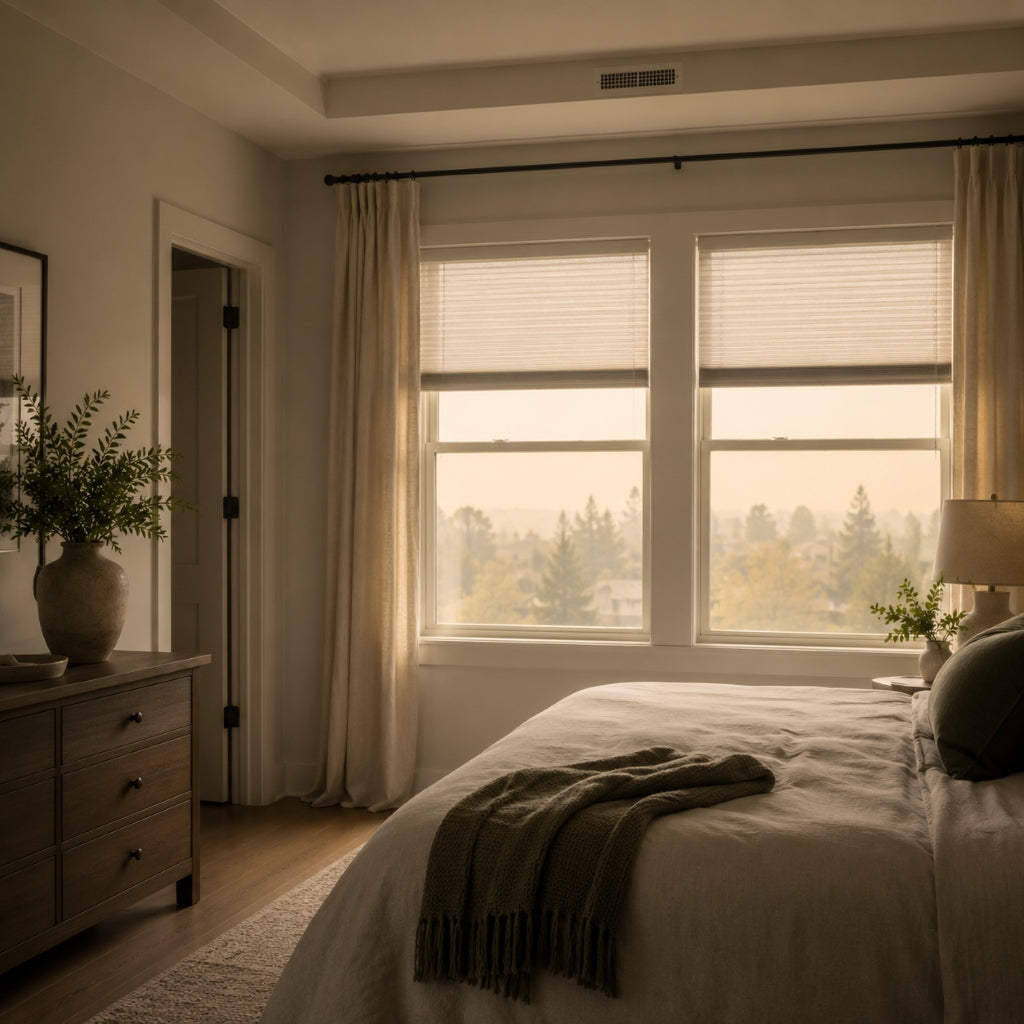
Wildfire smoke can reduce indoor air quality even when fires are hundreds of miles away and your windows are closed. Choosing the best air purifier for smoke means looking beyond basic filtration to find a system that can help address fine smoke particles, odors, volatile organic compounds (VOCs), and other airborne pollutants.
Smoke season often overlaps with extreme heat, forcing homeowners to keep windows closed and air conditioning systems running for long periods. With less fresh-air ventilation, smoke-related pollutants and contaminants generated inside the home can accumulate.
Why Wildfire Smoke Is an Indoor Air Quality Concern
Wildfire smoke is a complex mixture of fine particulate matter, gases, ash, soot, and combustion byproducts. Some particles settle relatively quickly, while smaller particles can remain suspended in the air and travel long distances.
One of the most significant concerns is PM2.5, or particulate matter measuring 2.5 micrometers or smaller. These microscopic smoke particles can enter homes through small openings around windows, doors, vents, HVAC systems, garages, and other building pathways.
Indoor smoke exposure can come from several sources, including:
- Wildfires and drifting regional smoke
- Nearby brush or grass fires
- Agricultural burning
- Wood-burning fireplaces and stoves
- Outdoor grilling
- Cooking smoke
- Tobacco smoke from neighboring properties
Even when visible haze is not present inside the home, fine particles, odors, and gaseous pollutants may still affect indoor air quality.

Why Smoke Season and Heatwaves Create Additional Problems
Wildfire smoke and heatwaves frequently occur at the same time. During these periods, homeowners often close windows, limit outdoor ventilation, and run air conditioning systems continuously.
This can contribute to:
- Higher concentrations of indoor VOCs
- Less natural ventilation
- More persistent cooking and household odors
- Increased circulation of dust and allergens
- Longer HVAC operating times
- Greater accumulation of indoor pollutants
Because outdoor air may be unsafe to bring inside, using an effective smoke air purifier can become an important part of a broader indoor air quality strategy.
What Type of Air Purifier Is Best for Smoke?
The best air purifier for wildfire smoke should address more than one type of pollutant. Smoke includes both solid particles and gaseous compounds, so a single purification method may not address every concern.
| Purification Feature | What It Helps Address |
|---|---|
| HEPA Filtration | Helps capture fine airborne particles, including dust, ash, soot, and smoke-related particulate matter. |
| Activated Carbon | Helps reduce smoke odors and certain gaseous pollutants and VOCs. |
| Active Purification | Adds another layer of treatment for airborne pollutants beyond filtration alone. |
| Strong Air Circulation | Moves more room air through or around the purification system throughout the day. |
A comprehensive system may combine mechanical filtration, odor-reducing media, strong airflow, and advanced purification technologies to address a broader range of indoor air quality concerns.
Key Features to Look for in an Air Purifier for Smoke
1. Effective Particle Filtration
Many homeowners look for an air purifier with a HEPA filter because HEPA media is designed to capture a high percentage of airborne particles that pass through the filter.
During smoke season, HEPA filtration can help capture fine particles associated with:
- Wildfire smoke
- Ash
- Soot
- Dust
- Pollen
- Pet dander
However, particle filtration alone does not address all of the gases, odors, and VOCs found in smoke.
2. Activated Carbon for Smoke Odors
Smoke contains gaseous compounds that cannot be effectively captured by particle filters alone. An air purifier with an activated carbon filter can help reduce many smoke-related odors and certain VOCs.
The amount and quality of activated carbon matter. A thin carbon sheet may provide limited odor reduction, while a more substantial carbon component may offer better performance over time.
An activated carbon air purifier may be especially helpful for homes affected by recurring wildfire smoke, cooking odors, fireplaces, tobacco smoke, or nearby wood-burning stoves.
3. Strong Airflow and Air Circulation
An air purifier must move enough air to make a meaningful difference in the intended room. The more frequently indoor air passes through or interacts with the purification system, the more opportunities the system has to reduce airborne contaminants.
When comparing units, consider:
- The recommended room size
- Fan-speed options
- Airflow at different settings
- Placement recommendations
- Whether the purifier can operate continuously
A small purifier may be appropriate for a bedroom but may not provide adequate circulation for an open-concept living area.
4. Appropriate Room Coverage
Choose a purifier with coverage that matches the size and layout of your space. Manufacturers may calculate room coverage using different assumptions, so compare ratings carefully.
For smoke events, choosing a unit with more capacity than the minimum requirement may allow the purifier to clean the room air more frequently.
Keep in mind that open doors, high ceilings, connected rooms, and open floor plans can affect real-world performance.
5. Clean Air Delivery Rate
Clean Air Delivery Rate, or CADR, is a measurement used to estimate how quickly an air purifier delivers filtered air for specific pollutants. CADR ratings are commonly provided for smoke, dust, and pollen.
A higher smoke CADR generally indicates that the purifier can filter smoke particles more quickly. However, CADR primarily evaluates particle filtration and does not fully describe a purifier's ability to address VOCs, odors, surface contaminants, or other gaseous pollutants.
Use CADR as one consideration alongside room coverage, activated carbon, purification technology, noise level, and operating cost.
6. VOC and Odor Reduction
Wildfire smoke contains volatile organic compounds and other gases produced during combustion. A quality VOC air purifier should include technology designed to help address these compounds rather than relying only on particle filtration.
VOC and odor reduction become particularly important during long smoke events when windows remain closed and outdoor ventilation is limited.
7. Quiet Operation
Smoke season can last for days or weeks, making continuous purifier operation important. A quiet air purifier is easier to use throughout the day and night without disrupting normal activities.
Quiet operation is particularly valuable during:
- Sleeping
- Working from home
- Watching television
- Reading
- Family gatherings
Check the purifier's noise rating at both its lowest and highest fan speeds. The quietest setting may not always provide enough airflow during periods of heavy smoke.
8. Energy Efficiency
During wildfire smoke events, homeowners may need to operate an air purifier around the clock. An energy-efficient purifier can help limit electricity costs during extended use.
Before purchasing, review the purifier's wattage, recommended operating schedule, filter replacement costs, and expected maintenance requirements.
HEPA Filters vs. Activated Carbon for Smoke
HEPA and activated carbon serve different purposes, and the best air purifier for smoke may use both.
| Filter Type | Primary Function | Smoke-Related Benefits |
|---|---|---|
| HEPA Filter | Captures airborne particles | Helps capture smoke particles, ash, soot, dust, pollen, and other fine particulate matter. |
| Activated Carbon | Adsorbs certain gases and odors | Helps reduce smoke odors and some VOCs that particle filters cannot capture. |
A HEPA filter does not replace activated carbon, and activated carbon does not replace particle filtration. Each technology addresses a different part of the smoke pollution mixture.
Beyond Traditional Air Filtration
Traditional air purifiers primarily capture pollutants after contaminated air physically passes through the filter. This can be effective for many airborne particles, but smoke-season indoor air quality concerns often include more than particulate matter.
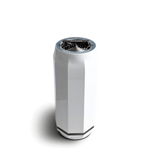
The Core takes a broader approach by combining HEPA filtration with patented active purification technology. This provides multiple layers of indoor air treatment in one system.
During smoke season, homeowners may be dealing with both outdoor pollutants entering the home and indoor contaminants accumulating because windows remain closed. A system that combines filtration, air circulation, and active purification can help address a wider variety of airborne concerns.
Puraclenz Core for Smoke Season and Everyday Air Quality
The Core is designed to support cleaner indoor environments during wildfire season, heatwaves, and everyday use.
The system combines:
- HEPA filtration for airborne particles
- Patented active purification technology
- Continuous indoor air circulation
- VOC reduction capabilities
- Odor reduction
- Quiet operation
- Coverage for larger living spaces
- A modern, compact design
Rather than relying only on pollutants passing through a passive filter, The Core adds active purification to its filtration system. This provides an additional layer of indoor air treatment for homeowners concerned about smoke particles, odors, VOCs, allergens, and other airborne pollutants.
The Core can be used throughout the year, including during:
- Wildfire smoke events
- Periods of poor outdoor air quality
- Summer heatwaves
- High-allergen seasons
- Periods of limited ventilation
- Everyday household activities
Smoke Season Air Purifier Buying Checklist
Before choosing a purifier, use this checklist to compare your options:
- Particle filtration: Does the unit include a true HEPA filter or comparable high-efficiency particle filtration?
- Carbon filtration: Does it contain enough activated carbon to help with smoke odors?
- VOC reduction: Does the purifier include technology designed to address gaseous pollutants?
- Room coverage: Is the purifier appropriately sized for your intended space?
- Airflow: Can it circulate the room air frequently enough during smoke events?
- Noise level: Can you comfortably run it during sleep and daily activities?
- Energy use: Is it practical to operate for extended periods?
- Maintenance: Are replacement filters easy to find and install?
- Operating costs: What will filters and energy cost over a full year?
- Placement: Will the purifier fit in an open location where airflow is not blocked?
How to Use an Air Purifier During Wildfire Smoke
Buying the right air purifier is only part of an effective smoke-season strategy. Proper use and placement can significantly affect performance.
Keep Windows and Exterior Doors Closed
When outdoor air quality is poor, keep windows and exterior doors closed as much as possible. Frequently opening doors can allow more smoke and fine particulate matter to enter the home.
Run the Purifier Continuously
Operate the purifier continuously during active smoke events. Use a higher fan speed when outdoor smoke levels are elevated, then reduce the setting once indoor conditions improve.
Place the Purifier in an Open Area
Do not place the unit behind furniture, under a table, or directly against a wall unless the manufacturer specifically allows it. Leave adequate space around air intakes and outlets.
Prioritize the Rooms You Use Most
If you only have one purifier, place it in the room where household members spend the most time. This may be a bedroom overnight and a living area during the day.
Replace Filters as Recommended
Heavy smoke can cause filters to load more quickly than usual. Inspect filters regularly and follow the manufacturer's replacement guidance.
Reduce Indoor Sources of Pollution
During smoke events, avoid activities that generate additional particles or odors, such as:
- Burning candles or incense
- Using a wood-burning fireplace
- Smoking indoors
- Frying or searing food without ventilation
- Using aerosol sprays
- Vacuuming without effective filtration
Are Air Purifiers Worth It During Smoke Season?
Air purifiers can be particularly valuable when outdoor air quality prevents homeowners from opening windows or using natural ventilation.
An air purifier may be worth considering if your home is regularly affected by:
- Wildfire smoke
- Seasonal brush fires
- Wood-burning stoves or fireplaces
- Heavy outdoor pollution
- Cooking smoke and household odors
- Dust and pollen
- Pet dander
- Recurring periods of poor outdoor air quality
Air purifiers do not eliminate every indoor air quality problem or prevent smoke from entering the home. However, the right system can help reduce airborne particles and other pollutants when used as part of a broader smoke-management strategy.

Frequently Asked Questions About Air Purifiers for Smoke
Can an air purifier remove wildfire smoke?
An air purifier can help reduce airborne particles associated with wildfire smoke. A system that combines HEPA filtration with activated carbon or other odor- and VOC-reduction technologies can address both particulate matter and some gaseous pollutants. No purifier removes every component of smoke, so it should be used alongside source control and reduced outdoor-air infiltration.
Do HEPA filters remove smoke particles?
HEPA filters can capture many fine airborne particles associated with smoke, including ash, soot, and particulate matter. However, HEPA filters do not effectively remove all smoke odors, gases, or VOCs. Activated carbon or additional purification technology is needed to address those concerns.
What is the best air purifier for wildfire smoke?
The best air purifier for wildfire smoke depends on your room size, the purifier's airflow, particle filtration, activated carbon content, noise level, energy use, and ability to address VOCs and odors. Look for a system that is properly sized for your space and combines multiple purification technologies.
How long should I run an air purifier during smoke season?
During active wildfire smoke events, an air purifier should generally run continuously. A higher setting may be useful when outdoor smoke levels are elevated, while a lower setting may be appropriate overnight or once indoor air conditions improve.
Should I open my windows while running an air purifier?
Keep windows closed when outdoor air quality is poor. Opening windows during a wildfire smoke event can allow more fine particles and gaseous pollutants into the home, increasing the amount of pollution the purifier must address.
Can smoke enter a home when the windows are closed?
Yes. Smoke can enter through small gaps around windows and doors, ventilation systems, attics, garages, exhaust vents, and other pathways. Indoor activities can also generate particles and VOCs that accumulate when ventilation is limited.
Does activated carbon remove wildfire smoke?
Activated carbon can help reduce certain smoke odors and gaseous compounds, but it does not replace particle filtration. For broader smoke protection, activated carbon should be paired with HEPA filtration or another effective particle-capture technology.
What CADR is best for wildfire smoke?
The appropriate smoke CADR depends on the size of the room and how frequently you want the air cleaned. Larger rooms generally require a higher CADR. Compare the purifier's smoke CADR with its recommended room coverage and consider choosing additional capacity for periods of heavy smoke.
Can an air purifier help with cigarette smoke?
The best air purifier for cigarette smoke should include both particle filtration and a substantial amount of activated carbon. Particle filtration helps capture fine smoke particles, while activated carbon helps reduce some odors and gaseous compounds. Source removal remains the most effective way to prevent indoor tobacco smoke exposure.
Is Puraclenz Core suitable for smoke season?
The Core combines HEPA filtration, air circulation, and patented active purification technology to help reduce airborne particles, odors, VOCs, and other indoor pollutants. This makes it a strong option for homeowners looking to support cleaner indoor air during smoke season and throughout the year.
Choosing the Best Air Purifier for Smoke Season
Smoke season creates indoor air quality challenges that extend beyond visible haze. Fine particulate matter, ash, soot, odors, VOCs, and limited ventilation can all affect the air inside your home.
When searching for the best air purifier for smoke, consider more than the filter label. Evaluate particle filtration, activated carbon, airflow, room coverage, noise level, energy efficiency, maintenance costs, and technologies designed to address pollutants beyond filtration alone.
The Puraclenz Core combines HEPA filtration with patented active purification technology and continuous air circulation. It is designed to help reduce airborne particles, pollutants, VOCs, and odors during wildfire smoke events, summer heatwaves, and everyday indoor living.
Recommended products

Core Air & Surface Purifier + HEPA
$649.99
Recommended articles

