 Free Shipping
 2-Year Warranty
 30-Day Money Back Guarantee



Wildfire Smoke vs. Everyday Air Pollution: What’s the Difference?
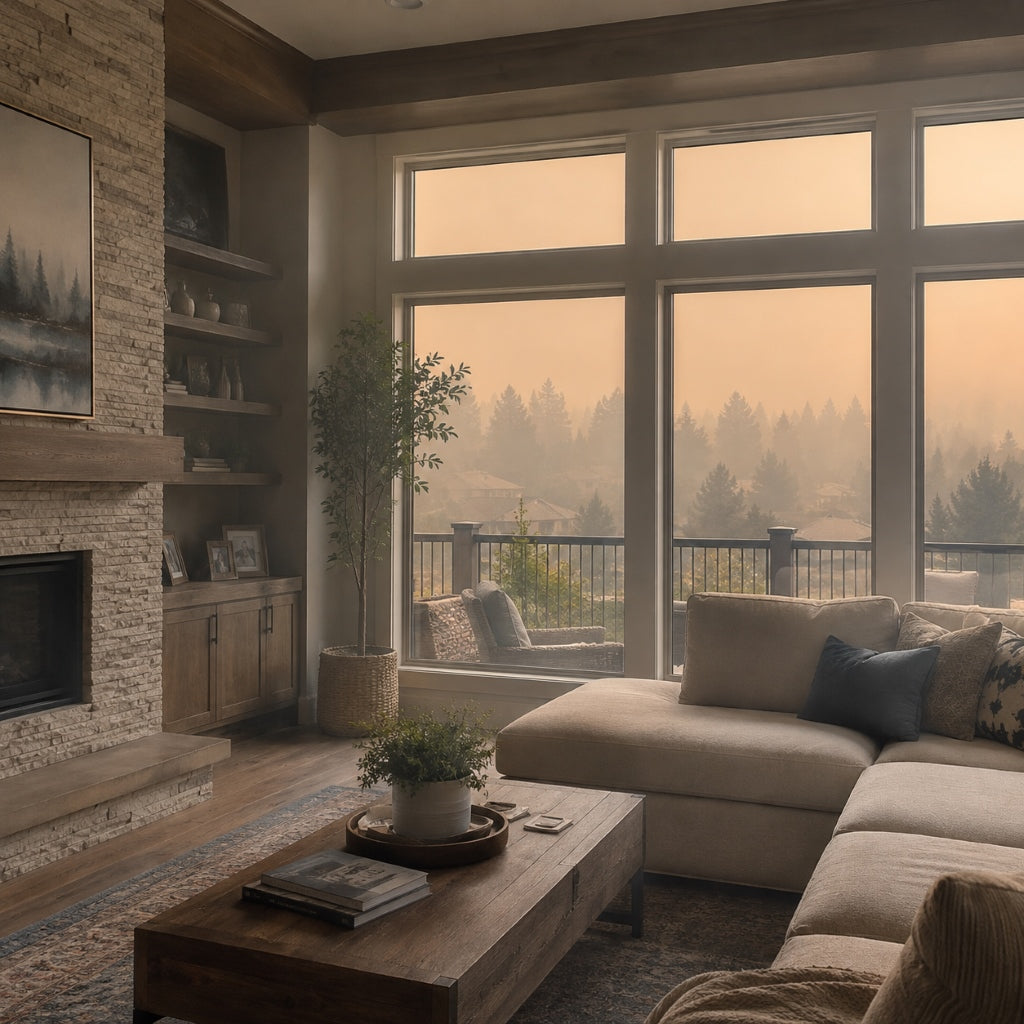
Wildfire smoke can change outdoor air quality quickly, sometimes affecting communities hundreds or even thousands of miles from an active fire. As smoke moves into populated areas, fine particles can also enter homes through windows, doors, ventilation systems, and small gaps in the building.
But how does wildfire smoke compare with the everyday air pollution already found inside a home?
Understanding the differences between wildfire smoke vs. indoor air pollution can help homeowners identify common pollutant sources, protect indoor air quality, and choose an appropriate air purifier for smoke and other airborne pollutants.
What Is Wildfire Smoke?
Wildfire smoke is a complex mixture of gases and microscopic particles produced when trees, vegetation, buildings, and other materials burn.
One of its most important components is fine particulate matter, including PM2.5. PM2.5 refers to particles measuring 2.5 micrometers or smaller. Because these particles are extremely small, they can remain suspended in the air and travel significant distances.
During an active wildfire event, outdoor concentrations of smoke particles can rise rapidly. Even with windows and doors closed, some wildfire smoke can still enter a home through:
- Small gaps around windows and doors
- Ventilation and HVAC systems
- Bathroom and kitchen exhaust pathways
- Frequent opening of exterior doors
- Other areas where outdoor air can infiltrate the home
As a result, wildfire smoke can contribute to elevated PM2.5 indoors even when the fire itself is far away.

What Is Everyday Indoor Air Pollution?
Unlike wildfire smoke, which primarily originates outdoors, indoor air pollution can come from many everyday activities, products, and materials inside the home.
Common sources of indoor air pollution include:
- Dust and airborne particles
- Cooking smoke and odors
- Cigarette and tobacco smoke
- Pet dander
- Pollen carried indoors
- VOCs from cleaning products, furniture, paints, and building materials
- Smoke from fireplaces and other combustion sources
- Outdoor pollution entering through windows, doors, and ventilation
These pollutants may be present throughout the year rather than only during a specific smoke event. Their concentrations can also change from room to room depending on ventilation, household activities, and the sources present.
Wildfire Smoke vs. Air Pollution: Key Differences
When comparing wildfire smoke vs. air pollution, the biggest differences are where the pollution comes from, how quickly concentrations can change, and which pollutants are most prominent.
Wildfire smoke originates outdoors and can affect an entire region depending on fire activity, wind, and weather conditions. Everyday indoor pollution is often connected to specific activities or materials inside the home.
Wildfire events can also cause sudden increases in fine particulate matter. Everyday indoor pollution may be more consistent, although certain activities such as cooking, smoking, cleaning, or using a fireplace can cause temporary spikes.
Wildfire Smoke
- Primarily originates outdoors
- Can travel hundreds or thousands of miles
- May rapidly increase airborne particle concentrations
- Can enter homes through infiltration and ventilation
- Can contribute to elevated indoor PM2.5
- May affect large geographic areas at the same time
Everyday Indoor Air Pollution
- Often originates from activities and materials inside the home
- Can occur throughout the year
- May include particles, odors, VOCs, allergens, and other pollutants
- Can vary based on cooking, cleaning, pets, smoking, and household products
- May accumulate when ventilation or indoor air exchange is limited
Why PM2.5 and Smoke Particles Matter Indoors
Fine particulate matter is one of the biggest indoor air-quality concerns during wildfire season.
Because PM2.5 particles measure 2.5 micrometers or smaller, they are much smaller than many visible dust particles. Ordinary dust-control measures alone may therefore not address the fine airborne particles associated with wildfire smoke.
Keeping windows and doors closed when outdoor smoke levels are high can help reduce infiltration, but it may not prevent smoke from entering completely. At the same time, indoor activities such as cooking, burning candles, or smoking can add additional particulate matter.
For homeowners looking for an air purifier for wildfire smoke, high-efficiency particle filtration is an important technology to consider. A purifier equipped with a high-efficiency particulate filter can capture airborne particles as air passes through the system.
What About Cigarette Smoke?
Cigarette smoke is another common source of fine particles, gases, and lingering odors. Unlike wildfire smoke, tobacco smoke is usually generated directly inside or immediately around the home.
However, some of the same indoor air-quality considerations still apply.
When choosing an air purifier for cigarette smoke, homeowners may want to consider both particle filtration and technologies designed to address odors and gaseous pollutants.
People searching for the best air purifier for cigarette smoke should consider factors such as:
- Particle filtration efficiency
- Activated carbon or other odor-control technologies
- Room size and purifier coverage
- Airflow and operating speed
- Filter replacement requirements
- Whether the unit can operate continuously
The best option will depend on the size of the space, the amount of smoke present, and the technologies included in the purifier.
How Puraclenz Core Addresses Smoke and Indoor Pollutants
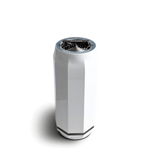
The Core is an all-in-one air purification system designed to address smoke, odors, and a broad range of indoor air pollutants.
Core combines H13 True HEPA filtration, activated carbon, PCO, and UV-C technologies in one system.
Its H13 True HEPA filter is designed to trap 99.97% of dust, pollen, pet dander, allergens 4, bacteria 3, and mold 1 down to 0.1 micron particle size.
The activated carbon component provides an additional layer of purification for pollutants such as VOCs, smoke, and odors.
This multi-technology approach makes Core an option for homeowners who want to address more than airborne particles alone, especially when a home may contain a combination of smoke, odors, VOCs, allergens, dust, and other pollutants.
Is the Best Air Purifier for Wildfire Smoke Different?
Not necessarily. The best air purifier for smoke depends on the specific type of pollution you are trying to address.
During wildfire season, fine-particle filtration becomes especially important because wildfire smoke can increase PM2.5 concentrations indoors.
For cigarette smoke, cooking smoke, or other everyday household pollutants, homeowners may also place greater emphasis on odor reduction and gaseous pollutants.
A multi-technology purifier can provide a broader approach. The Core, for example, combines True HEPA filtration with activated carbon, PCO, and UV-C technology.
When evaluating a smoke air purifier, consider:
- The size of the room or area you want to treat
- The type and source of smoke
- The purifier’s particle filtration technology
- Whether it also addresses odors and VOCs
- Airflow and coverage
- Filter replacement requirements
- Whether the purifier can operate continuously
- Where the purifier will be positioned in the home
How to Improve Indoor Air Quality During Wildfire Season
An air purifier can be an important part of a broader indoor air-quality strategy during wildfire events, but it should not be the only step.
When outdoor smoke levels rise, homeowners can also:
- Keep windows and exterior doors closed when practical
- Reduce activities that generate additional indoor particles
- Avoid burning candles or using fireplaces during heavy smoke events
- Limit indoor smoking
- Monitor outdoor and indoor air-quality conditions
- Run appropriate air purification and filtration systems
- Reduce other indoor pollution sources when possible
Reducing the amount of pollution entering or being generated inside the home can lower the overall pollutant load that an air-cleaning system needs to address.

Wildfire Smoke vs. Everyday Air Pollution: The Bottom Line
Wildfire smoke and everyday indoor air pollution can contain some of the same pollutants, but they are not the same thing.
Wildfire smoke primarily originates outdoors and can rapidly increase concentrations of fine particles and PM2.5 indoors. Everyday indoor air pollution can come from cooking, tobacco smoke, dust, pets, pollen, cleaning products, building materials, fireplaces, and other household sources.
For homeowners comparing an air purifier for smoke, it is useful to look beyond a single feature. Particle filtration, odor reduction, room coverage, airflow, and the overall purification technology can all matter depending on the pollutants present.
Puraclenz Core combines H13 True HEPA filtration, activated carbon, PCO, and UV-C technologies in one system designed to address smoke, odors, VOCs, dust, allergens, and other indoor pollutants.
Whether you are preparing for wildfire season or looking for an everyday smoke air purifier, identifying the source and type of pollution is the first step toward creating a more effective indoor air-quality strategy.
Recommended products

Core Air & Surface Purifier + HEPA
$649.99
Recommended articles

