 Free Shipping
 2-Year Warranty
 30-Day Money Back Guarantee



Wildfire Smoke Indoors: How to Protect Your Home This Summer

Wildfire smoke can travel hundreds or even thousands of miles from an active fire, affecting communities far from the flames. During peak smoke season, fine particles, odors, and gases can enter through open doors, windows, ventilation systems, and small gaps around the home.
Once wildfire smoke indoors becomes trapped, closing the windows may not be enough. Smoke particles can remain suspended, circulate through rooms, and settle onto furniture, carpets, bedding, and other surfaces.
A strong wildfire smoke home protection plan should focus on limiting outdoor smoke, filtering particles already inside, reducing odors and gases, and monitoring indoor air conditions.
Why Wildfire Smoke Becomes an Indoor Air Problem
Wildfire smoke contains fine particles, gases, ash, water vapor, and chemical compounds produced as trees, vegetation, buildings, and other materials burn.
One of the biggest concerns is PM2.5. These particles are small enough to remain airborne for long periods and enter through openings that may not appear large enough to let visible smoke inside.
Wildfire smoke may enter through:
- Open windows and exterior doors
- HVAC fresh-air intakes
- Bathroom and kitchen exhaust systems
- Window or portable air conditioners
- Gaps around windows, doors, and exterior walls
- Frequent trips in and out of the home
Even without a visible haze, pollutants may still be present. A lingering smoky odor, throat or eye irritation, or a sudden increase in indoor PM2.5 can indicate that smoke has entered.

How to Keep Wildfire Smoke Out
During periods of poor outdoor air quality, keep windows and exterior doors closed as much as possible while maintaining a safe indoor temperature.
Check weatherstripping, door gaps, window seals, attic access points, and openings around utility lines where smoke may leak inside.
If your HVAC system has an outdoor-air intake, consider using recirculation mode during a smoke event. Consult the manufacturer’s instructions or an HVAC professional before changing unfamiliar settings.
You may also want to ask whether your HVAC system can safely use a higher-efficiency filter without restricting airflow.
Create a Cleaner-Air Room
During severe smoke conditions, it may be easier to concentrate air-cleaning efforts in one room.
Choose a bedroom or interior living area with few exterior windows and doors. Keep it closed off from the rest of the home and operate a properly sized air purifier for smoke continuously.
Avoid indoor activities that add particles or odors, including:
- Smoking or vaping
- Burning candles or incense
- Frying or broiling food
- Using aerosol sprays
- Vacuuming without a HEPA filter
- Using fireplaces or unvented combustion appliances
Can an Air Purifier Help with Wildfire Smoke Indoors?
A properly designed smoke air purifier can help reduce airborne particles that enter the home. However, not every purifier addresses the same pollutants.
Wildfire smoke includes particles and gaseous pollutants, so a system that relies on only one filtration method may provide incomplete coverage. Look for technologies designed to address fine particles, odors, and volatile organic compounds.
Important features include:
- True HEPA filtration
- Activated carbon
- Coverage appropriate for the room
- Continuous operation
- PM2.5 monitoring
- Automatic fan-speed adjustment
- Accessible replacement filters
- Low-noise settings
Why True HEPA Filtration Matters
True HEPA filtration is one of the most important features when choosing the best air purifier for smoke. A HEPA filter physically traps airborne particles as air moves through the purifier.
The H13 True HEPA filter used by Puraclenz Core is designed to trap 99.97% of dust, pollen, pet dander, allergens, bacteria 3, and mold 1 down to 0.1 micron-sized particles.
During wildfire conditions, filtration can help reduce fine smoke particles, airborne ash, soot, and other particulate matter. The purifier should be properly sized and operated consistently.
Filters may become dirty more quickly during prolonged smoke events, so inspect and replace them as recommended.
Why Activated Carbon Matters
HEPA filters focus on particles, but they are not designed to capture every gas or odor-producing compound in wildfire smoke.
Activated carbon helps adsorb certain odors and VOCs as air passes through the filter. This is especially useful when the visible smoke has cleared but a smoky smell remains.
When comparing an air purifier for smoke, choose a model that combines True HEPA and activated carbon for broader coverage.
Is the Best Air Purifier for Cigarette Smoke Also Good for Wildfire Smoke?
People searching for the best air purifier for cigarette smoke and those dealing with wildfire smoke often need similar technologies. Both may introduce fine particles, odors, and gaseous pollutants indoors.
A suitable purifier should combine efficient particle filtration with activated carbon. However, no purifier can make active smoking indoors risk-free or replace the need to prevent smoke from entering.
For wildfire smoke, room coverage and airflow are also important. A purifier designed for a bedroom may not be enough for a large open-concept space.
How Puraclenz Core Helps During Smoke Season
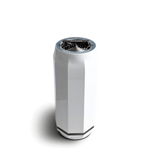
Puraclenz Core is an all-in-one air and surface purification system that combines multiple technologies for broader indoor air support.
Core includes:
- H13 True HEPA filtration
- Activated carbon filtration
- Patented PCO purification
- An internal germicidal UV-C lamp
- A washable pre-filter
- Indoor PM2.5 monitoring
- Automatic fan-speed adjustment
The HEPA stage helps trap airborne particles, while activated carbon helps trap smoke, odors, and VOCs. Core’s patented Photocatalytic Oxidation technology also creates a continuous purification process designed to help address pollutants in the air and on exposed surfaces.
The built-in sensor measures indoor PM2.5 conditions. In automatic mode, Core can adjust its fan speed as particle levels change.
Because smoke conditions can shift quickly, operate the purifier continuously rather than waiting until the room smells smoky.
Where Should You Place a Smoke Air Purifier?
Place the purifier in the room where people spend the most time or where particle readings are highest.
For better airflow:
- Keep the intake and outlet unobstructed
- Avoid placing the unit against furniture or curtains
- Close exterior windows and doors
- Keep interior doors closed in a cleaner-air room
- Operate the purifier continuously
- Use a higher fan speed when smoke levels rise
A single purifier may not evenly clean every room in a large or divided home. Multiple units may be needed for separate bedrooms, offices, or living areas.
Monitor Outdoor and Indoor Air Quality
Do not rely only on visibility or smell. Smoke concentrations can increase even when the sky does not look especially hazy.
Monitor the local Air Quality Index during smoke season and follow alerts from local authorities. Conditions can change with wind direction, weather, and fire activity.
Indoor monitoring can also show whether your prevention steps are working. A rise in PM2.5 may indicate smoke entering through a door, window, HVAC intake, or another opening.
Clean Carefully After Smoke Enters
Smoke particles may settle onto floors, counters, furniture, and fabrics. Avoid cleaning methods that return them to the air.
After outdoor air quality improves:
- Wipe hard surfaces with a damp cloth
- Damp-mop hard flooring
- Wash bedding and fabrics
- Use a HEPA-filtered vacuum
- Replace heavily soiled filters
- Ventilate when outdoor air is cleaner
If ash accumulation is significant or came from a nearby structural fire, follow local cleanup guidance and consider professional help.

Wildfire Smoke Home Protection Checklist
- Check weatherstripping around windows and doors
- Identify a cleaner-air room
- Purchase replacement filters in advance
- Review HVAC recirculation settings
- Choose a properly sized air purifier for smoke
- Monitor local AQI forecasts
- Run the purifier before indoor air smells smoky
- Avoid candles, smoking, aerosols, and high-particle cooking
- Follow local evacuation instructions immediately
Protect Your Indoor Air Throughout Smoke Season
Managing wildfire smoke indoors requires more than one action. The strongest approach combines smoke prevention, particle filtration, odor and VOC reduction, air-quality monitoring, and careful cleaning.
Keep windows and doors closed when outdoor smoke is elevated, use recirculation settings when appropriate, create a cleaner-air room, and operate a properly sized purifier continuously.
When choosing the best air purifier for smoke, look for a system that addresses both particles and gaseous pollutants. Puraclenz Core combines H13 True HEPA, activated carbon, PCO, UV-C, and PM2.5 monitoring to help reduce smoke, odors, VOCs, dust, allergens 4, mold 1, bacteria 3, and other indoor pollutants.
Recommended products

Core Air & Surface Purifier + HEPA
$649.99
Recommended articles

