 Free Shipping
 2-Year Warranty
 30-Day Money Back Guarantee


Pet Dander vs Dust: Which Pollutes Your Home More?
When it comes to indoor air quality, many homeowners ask the same question: pet dander vs dust, which one is actually polluting the air more?
Both are common indoor pollutants. Both circulate through your HVAC system. Both can settle on furniture, floors and bedding before becoming airborne again. But they are not the same and understanding the difference can help you choose the right air purifier for pets and dust control.
What Is Pet Dander?
Pet dander consists of microscopic skin flakes shed by cats, dogs and other animals with fur or feathers. Unlike pet hair, dander particles are extremely small and lightweight. They can remain suspended in the air for long periods, increasing exposure throughout your home.
Pet dander is often accompanied by pet hair, saliva proteins and tracked-in outdoor debris. These particles can carry allergens 4, bacteria 3 and other airborne pollutants that accumulate in soft surfaces like couches and carpets.
This is why many homeowners search for the best air purifier for pets or an air purifier for pet dander specifically. Capturing these fine particles requires strong airflow and effective filtration, not just a basic fan with a filter.
What Is Household Dust?
Dust is a complex mixture of particles. It can include:
- Dead skin cells
- Fabric fibers
- Pet hair and dander
- Pollen and outdoor debris
- Mold 1 spores
- Fungal allergens 1
- Microscopic particles from everyday indoor activity
Because dust is a combination of materials, its particle sizes vary widely. Some dust particles are heavy and settle quickly. Others are fine enough to remain airborne and circulate repeatedly.
This leads to common questions like: does air purifier help with dust? Does an air purifier help with dust long term? Would an air purifier help with dust that keeps coming back? The answer depends on how the purifier captures and reduces airborne particles, not just what it claims to filter.

Pet Dander vs Dust: Which Pollutes More?
In a direct pet dander vs dust comparison, the bigger concern is often particle size and suspension time.
Pet dander particles are typically smaller and lighter than most visible dust. That means they stay airborne longer and are more easily inhaled. Even if you vacuum regularly, dander can remain circulating in the air.
Dust, on the other hand, may look more dramatic when it collects on surfaces. But much of what you see has already settled. The smallest dust particles, the ones that affect air clarity, behave more like dander.
So, in the dust vs dander debate, pet dander may contribute more to continuous airborne pollution, especially in homes with cats and dogs.
Why Pet Homes Experience Higher Particle Levels
Homes with pets tend to have:
- More continuous particle shedding
- Higher movement that stirs settled dust
- Additional outdoor debris tracked inside
This combination increases the need for a dedicated air purifier for pets. Many homeowners look for the best home air purifier for pets or the best air purifiers for pets to manage both visible pet hair and microscopic dander.
However, pet hair alone is not the primary air quality issue. Hair is heavy and settles quickly. The real concern is the fine airborne material, which requires consistent air circulation and purification.
Does an Air Purifier Help with Dust and Dander?
Questions like will an air purifier help with dust, can an air purifier help with dust, and does air purifier help with dust are extremely common. The short answer is yes, if the system is designed to actively circulate and reduce airborne particles.
An effective unit pulls air continuously through a filtration system, capturing fine particles before they resettle. This is particularly important for pet owners looking for:
- Best air purifier for pet hair
- Air purifier for pet hair
- Air purifier for cat allergies
- Air purifier for pet dander
Without consistent airflow, particles simply settle and re-enter the air later. Purification must be continuous to make a noticeable difference.

How Puraclenz Core Addresses Both
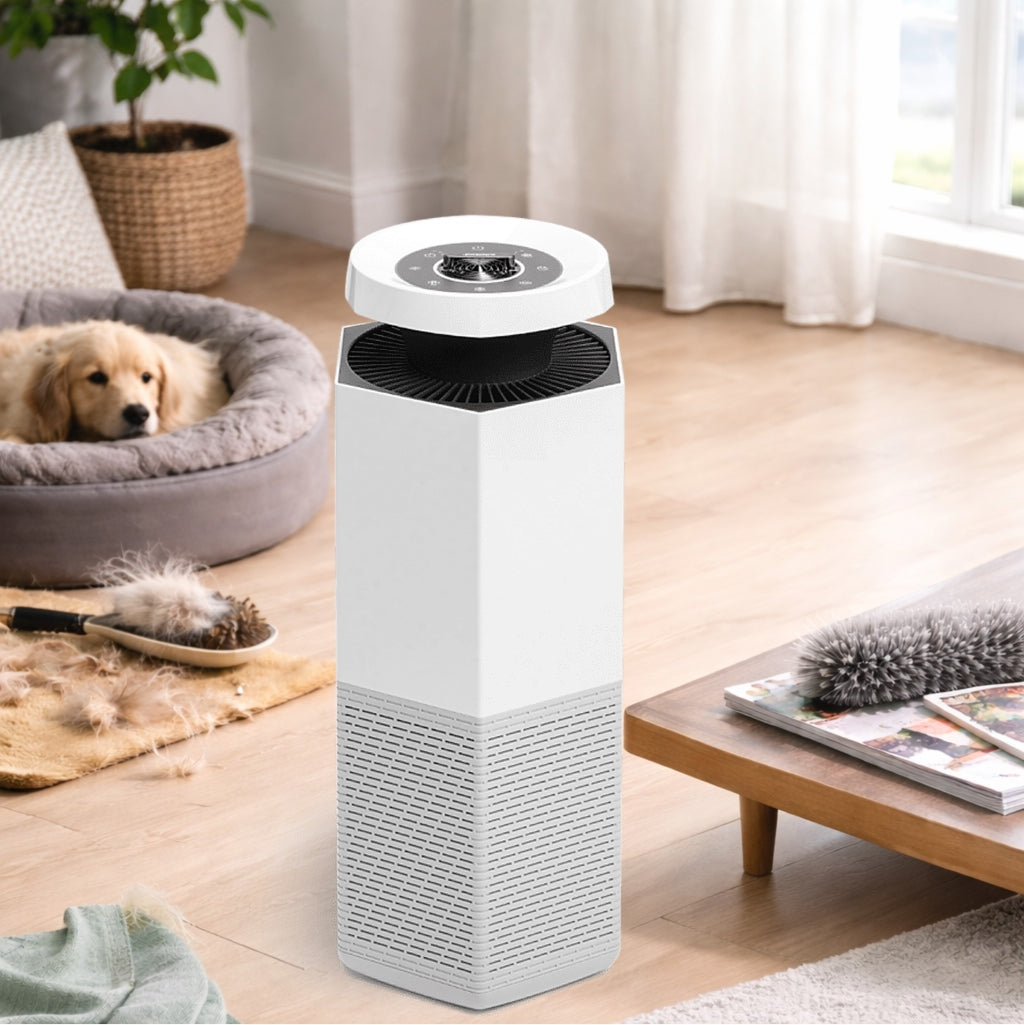
The Puraclenz Core is designed to reduce airborne pollutants through advanced PCO purification and multi-stage filtration. Instead of only trapping larger debris, the system continuously circulates indoor air to reduce fine particles associated with both dust and pet dander.
For households comparing pet dander vs dust, this matters. The Core helps reduce airborne particle levels so they are less likely to accumulate in the breathing zone.
For pet owners searching for the best air purifier for pets or an air purifier for pets that can handle both hair and microscopic debris, consistent purification is key. The Puraclenz Core supports rapid purification while maintaining quiet operation suitable for everyday living spaces.
So, Which Is Worse?
If you do not have pets, dust may be your primary concern. But if you share your home with cats or dogs, pet dander is often the more persistent airborne pollutant.
In the pet dander vs dust comparison:
- Dust is more visible.
- Dander is often more airborne.
- Both contribute to ongoing indoor particle buildup.
The most effective approach is not choosing one over the other, it is reducing both with a properly sized air purifier for pets and general household dust control.
Whether you are wondering does an air purifier help with dust or searching for the best air purifier for pets, understanding particle behavior helps you make a smarter decision for your indoor environment.
Recommended products

Core Air & Surface Purifier + HEPA
$649.99

