 Free Shipping
 2-Year Warranty
 30-Day Money Back Guarantee



Mold vs Mildew: What’s the Difference for IAQ?
When homeowners search for the mold vs mildew difference, they are usually concerned about what is floating in their air and how it affects their health. While the two terms are often used interchangeably, mold 1 and mildew 1 are not exactly the same. Understanding how each behaves indoors can help you make better decisions about moisture control and choosing the right air purifier for mold.
Understanding Mold and Mildew
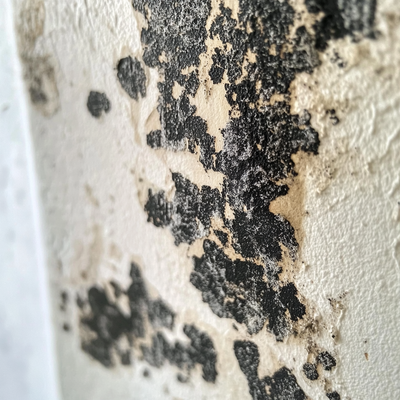
Both mold 1 and mildew 1 are types of fungi that grow in damp environments. The mildew vs mold home conversation usually begins with appearance. Mildew often appears as flat, powdery patches in white or gray tones. Mold 1 tends to look darker, thicker, and may appear fuzzy or slimy depending on the species.
From an indoor air quality perspective, the biggest issue is not just what you see on a wall or ceiling. It is what you do not see. Both release microscopic spores into the air, contributing to mold mildew air contamination and increasing airborne fungal allergens 1.
Why the Mold vs Mildew Difference Matters for IAQ
The mold vs mildew difference becomes important when discussing indoor air quality because mold 1 typically penetrates surfaces more deeply and can spread behind drywall, under flooring, or inside insulation. Mildew 1 is often more surface-level but still releases spores that circulate through living spaces.
When spores become airborne, they behave like other indoor allergens 4. They can linger in stagnant areas and move throughout the home via natural airflow. This is where many homeowners begin asking, do air purifiers help with mold? The answer depends on the technology being used.

Can an Air Purifier Help with Mold?
One of the most common questions is can an air purifier help with mold? An air purifier does not replace fixing the moisture source. It will not stop active growth inside walls. However, a properly designed mold air purifier can significantly reduce airborne spores that circulate after disturbance or during remediation.
So will an air purifier help with mold? Yes, when used as part of a broader strategy. The goal is to capture and neutralize airborne contaminants before they settle elsewhere in the home.
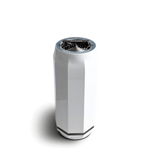
The Puraclenz Core is engineered to address these airborne challenges. Unlike passive systems that only trap particles, the Core combines advanced purification technologies designed to actively reduce airborne pollutants, including mold 1 spores and fungal allergens 1. This makes it a powerful option for homeowners researching the best air purifier for mold.
Air Purifiers for Mold vs Surface Removal
It is important to separate surface cleaning from air treatment. A mold removal air purifier is not a replacement for physically removing contaminated materials. Instead, air purifiers for mold focus on improving mold mildew air quality by reducing what is suspended in the breathing zone.
For example, during cleaning, brushing or tearing out drywall can send thousands of spores into the air. A high-performance air purifier mold solution like the Core helps capture and neutralize those particles during and after remediation.
This is why many remediation professionals use dedicated air purifier for mold systems during restoration projects. Homeowners looking for the best air purifiers for mold should look beyond basic filtration and consider advanced purification performance.
Choosing the Best Air Purifier for Mold
When researching the best air purifier for mold, consider three factors: airflow capacity, filtration efficiency, and active purification technology. A mold air purifier should be powerful enough to cycle the air in the room multiple times per hour.
The Core is designed for whole-home air quality improvement. Its advanced purification process targets airborne mold 1 particles and other contaminants at a microscopic level. For homeowners asking can an air purifier help with mold, the Core provides a science-backed approach to reducing airborne exposure.
Because mold 1 spreads through spores rather than visible patches alone, controlling the air is critical. The best air purifier for mold works continuously to reduce the overall spore load indoors.

Mildew vs Mold Home Prevention Strategy
Preventing future growth requires controlling humidity, repairing leaks, and improving ventilation. However, even after moisture problems are addressed, airborne spores may remain. That lingering mold mildew air contamination can continue affecting indoor comfort.
Pairing moisture control with a mold air purifier like the Core creates a layered defense strategy. Homeowners who ask do air purifiers help with mold often discover that combining source control with air purification delivers the best results.
The Bottom Line on Mold vs Mildew Difference
The mold vs mildew difference comes down to structure, depth of growth, and potential impact on indoor air quality. While mildew 1 is often surface-level and easier to remove, mold 1 can spread deeper and release significant airborne spores.
Addressing moisture is always the first step. But improving air quality is just as important. Whether you are researching air purifier mold solutions, wondering will an air purifier help with mold, or comparing the best air purifiers for mold, choosing a system designed for advanced airborne purification makes a measurable difference.
The Core stands out as a comprehensive mold air purifier solution. By actively reducing airborne mold 1 spores and fungal allergens 1, it supports a cleaner indoor environment while you tackle the root cause. When it comes to protecting indoor air, understanding the mold vs mildew difference is only the beginning. Acting on it is what truly improves your IAQ.
Recommended products

Core Air & Surface Purifier + HEPA
$649.99
Recommended articles

