 Free Shipping
 2-Year Warranty
 30-Day Money Back Guarantee



Mold Fogging vs Continuous Air Treatment: What Works Better
Mold is one of the most persistent indoor air quality challenges homeowners face. Whether it appears after water damage or develops slowly in damp areas, many people turn to professional fogging services as a solution. While fogging can play a role in remediation, it is important to understand what it does, and what it does not do.
If you are considering fogging or looking for a longer-term approach, here is how mold fogging compares to continuous air treatment.
For a deeper comparison, visit our Mold Fogging vs Puraclenz page to see how each approach differs.
What Is Mold Fogging?
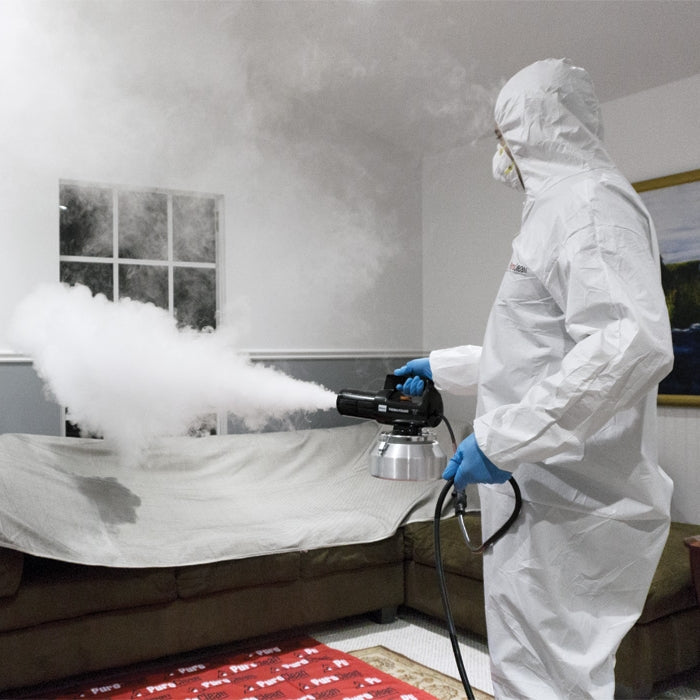
Mold fogging is a remediation method where a contractor disperses a fine mist, commonly hydrogen peroxide, throughout a room or home. This mist settles on surfaces and interacts with airborne particles.
Fogging is typically used after visible mold has already been removed. It acts as a finishing step to reduce remaining spores in the air and on exposed surfaces.
Key characteristics of mold fogging:
- Disperses a chemical mist throughout the space
- Often performed after remediation work
- Focuses on short-term reduction of airborne and surface spores
- Requires occupants to leave during treatment
While this process can reduce contamination levels temporarily, it is not designed to address ongoing air circulation or future exposure.
Why Fogging Is Only a Temporary Step
The biggest limitation of mold fogging is that it happens once. Indoor environments, however, are constantly changing.
Even after treatment:
- Air circulation continues moving mold spores throughout the home
- HVAC systems can recirculate airborne particles
- New spores can enter from outside or other damp areas
Because mold spores are naturally present in the environment, a one-time fogging treatment cannot keep levels low over time. This is why many homeowners find themselves scheduling repeated fogging services, with costs ranging from hundreds to thousands of dollars per visit.
The Problem with Repeated Fogging
At first glance, fogging may seem like a quick fix. But over time, it can become a recurring expense rather than a long-term solution.
Common drawbacks include:
- Ongoing costs for each visit
- Temporary results that require repeat treatments
- Disruption from needing to vacate the home
- No continuous treatment of airborne pollutants
Without addressing the constant movement of air and particles, mold can return between treatments.

A Different Approach: Continuous Air Treatment
Instead of treating the environment once, continuous air treatment focuses on managing mold 1 spores as they move through your home every day.
Puraclenz uses patented PCO purification technology to actively treat airborne pollutants as air circulates. This approach allows for ongoing reduction of mold 1 spores in both the air and on exposed surfaces.
Unlike fogging, continuous treatment:
- Works around the clock
- Targets airborne pollutants as they move through the space
- Provides consistent purification rather than a single event
- Does not require repeated service visits
This shift from one-time treatment to ongoing purification addresses the root issue: constant exposure to airborne mold 1 spores.
Treating Mold Where It Circulates
Air inside your home is always in motion. Every time your HVAC system runs, doors open, or people move through a space, particles are redistributed.
Continuous purification systems are designed to:
- Reduce mold 1 spores mid-air
- Treat exposed surfaces over time
- Address pollutants as they enter and circulate
This creates a more stable indoor environment compared to single-event treatments.
 Comparing Costs Over Time
When evaluating fogging versus continuous purification, cost structure is an important factor.
Fogging services:
- Typically range from $300 to $2,000 per visit
- May require multiple treatments over time
- Costs increase with recurring service
Continuous air purification:
- One-time purchase
- Ongoing treatment without repeat service fees
- Designed for long-term use
Over time, many homeowners find that repeated fogging becomes more expensive than investing in a continuous solution.
Mold Fogging vs Continuous Treatment
Here is a simple comparison:

Choosing the Right Approach
Fogging can be useful as part of a remediation process, especially after visible mold 1 removal. However, it is not designed to manage ongoing exposure to airborne spores.
For long-term indoor air quality, continuous purification offers a more consistent way to reduce mold 1 levels as air moves through your home.
A Smarter Long-Term Solution
Indoor air is not static, and mold 1 spores do not stay in one place. Addressing this issue requires a solution that works continuously, not just once.
Puraclenz air purifiers are designed to treat airborne pollutants using advanced PCO purification technology, helping reduce mold 1 spores in the air and on exposed surfaces over time.
If you are looking to move beyond temporary treatments and invest in a more consistent approach, continuous air purification provides a practical path forward.
Recommended products

Core Air & Surface Purifier + HEPA
$649.99

Photon Air & Surface Purifier
$399.99
Recommended articles

