 Free Shipping
 2-Year Warranty
 30-Day Money Back Guarantee



Can Mold Grow in Winter? Why Cold Weather Doesn't Stop Indoor Mold
Cold weather doesn't always mean a home is protected from mold. Even when temperatures fall below freezing, indoor humidity, window condensation, and hidden leaks can create conditions that allow mold to grow. Managing moisture is the first step toward prevention, while solutions such as the Puraclenz Photon Air & Surface Purifier may complement a broader indoor air quality routine.
During winter, windows and doors often stay closed, ventilation may be limited, and daily activities continue to add moisture to the air. Cooking, showering, doing laundry, and even breathing can raise indoor humidity. When warm, moist air meets a cold surface, condensation may form and leave behind the damp conditions mold needs.
Here's why mold can remain a problem in cold weather, where to look for warning signs, and what homeowners can do to manage winter moisture.

1. Indoor Humidity Can Remain High During Winter
Outdoor air may be cold and dry, but that doesn't automatically mean every area inside your home is dry. Moisture from daily activities can build up, especially in rooms with inadequate ventilation.
Common sources of indoor moisture include:
- Hot showers and baths
- Cooking, boiling water, and running dishwashers
- Drying clothes indoors
- Houseplants and other household activities
- Plumbing leaks and water entering through poorly sealed areas
Excess humidity can collect on windows, walls, ceilings, and other cool surfaces. If those areas remain damp, mold growth may follow, regardless of the outdoor temperature.
2. Window Condensation Can Encourage Mold Growth
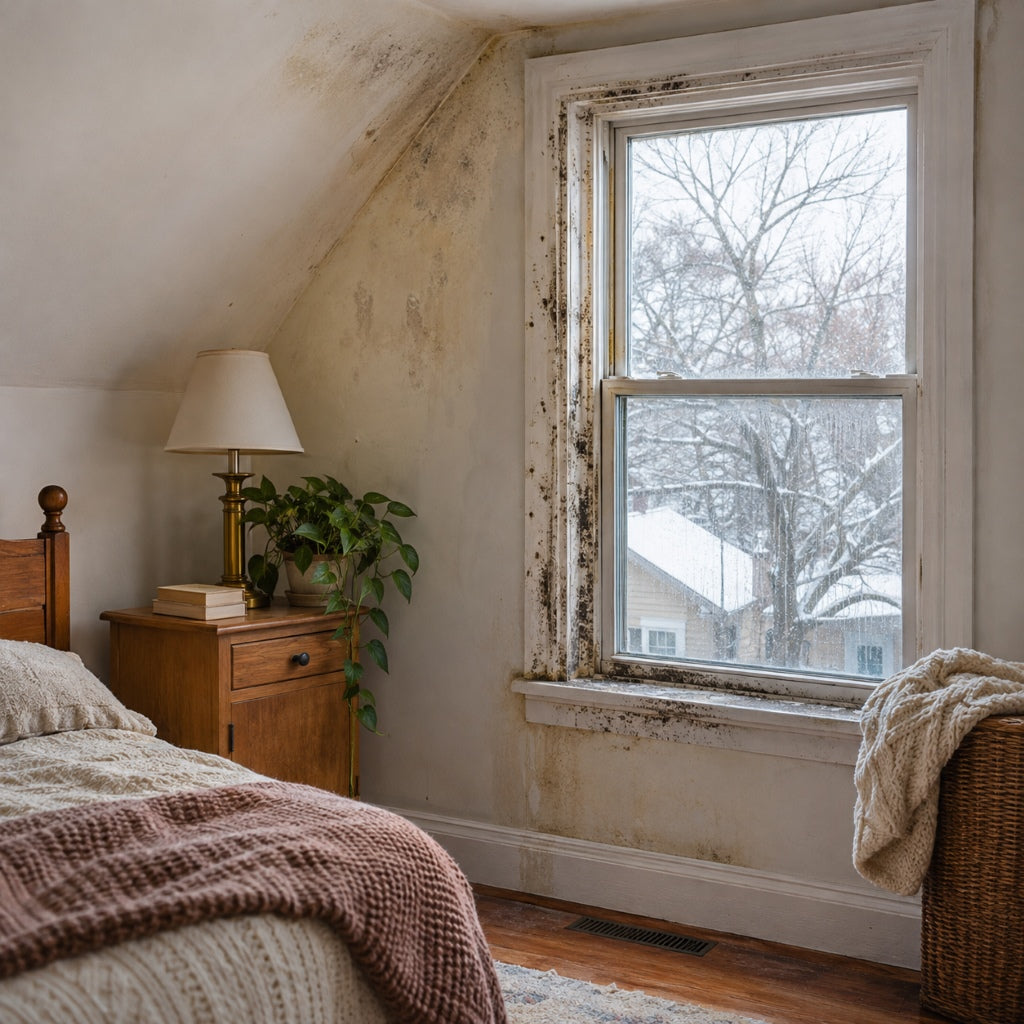
Condensation occurs when warm, humid indoor air meets a surface cold enough for water droplets to form. During winter, this commonly happens around:
- Window glass, frames, and sills
- Exterior walls and room corners
- Poorly insulated areas
- Basement walls
- Doors and other exterior openings
Repeated condensation can keep these surfaces damp. Pay particular attention to window sills and frames, where moisture may collect unnoticed. Wiping away water helps in the short term, but recurring condensation should prompt a closer look at humidity, ventilation, and insulation.
3. Closed Windows and Poor Ventilation Can Trap Moisture
In winter, homeowners tend to keep windows closed to hold in heat. That can reduce natural air exchange and allow moisture from cooking, bathing, and laundry to linger indoors.
Kitchens, bathrooms, laundry rooms, and basements are especially important to monitor. Use bathroom exhaust fans during and after showers, run kitchen range hoods that vent outdoors when cooking, and address rooms that remain persistently damp.
Effective ventilation helps remove excess moisture, although the best approach depends on the home's climate, heating system, and ventilation setup.
4. Heating Alone Doesn't Remove Moisture
Heating makes indoor spaces more comfortable and may warm some surfaces enough to reduce condensation. However, turning up the thermostat does not, by itself, remove water vapor from the home.
Warm indoor air can still carry moisture to cold windows, exterior walls, and poorly insulated surfaces. Heating systems may also circulate existing dust and airborne particles throughout the house.
For better winter indoor air quality, consider humidity control, ventilation, insulation, and air purification as separate but complementary measures.
5. Common Places to Check for Mold in Winter
Mold is more likely to develop where moisture persists or airflow is limited. Check these areas regularly:
- Basements: Look for damp foundation walls, water seepage, and condensation.
- Bathrooms: Check ceilings, grout, and areas around showers, especially if ventilation is weak.
- Attics: Watch for roof leaks, damp insulation, and ventilation problems.
- Closets and storage spaces: Inspect items stored against cold exterior walls where air circulation is restricted.
- Windows and exterior walls: Look for recurring condensation, discoloration, or dampness around frames and corners.
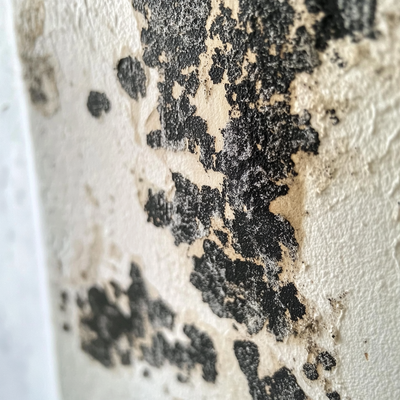
A musty smell, visible spotting, or persistent dampness can be a sign that an area needs further investigation. Address the moisture source rather than simply covering the affected surface.
6. How to Prevent Mold Growth During Cold Weather
The most effective way to reduce the risk of winter mold is to control excess moisture. These practical steps can help:
- Track indoor humidity. Use a hygrometer to monitor relative humidity. The EPA recommends keeping it below 60%, ideally between 30% and 50%. Colder weather may require a lower level to prevent window condensation.
- Use bathroom exhaust fans. Run them during showers and afterward to help remove moisture.
- Ventilate while cooking. Use a range hood that exhausts outdoors, particularly when cooking produces steam.
- Check windows and sills. Wipe away condensation and investigate moisture that repeatedly returns.
- Repair leaks promptly. Inspect pipes, roofs, ceilings, and basement walls for water intrusion.
- Improve airflow. Avoid blocking circulation along cold exterior walls with large furniture or stored belongings.
- Dry wet materials quickly. The EPA advises drying wet materials within 24–48 hours when possible, while also fixing the source of the water.
- Review insulation and ventilation. Address cold spots and recurring condensation that suggest a larger building issue.
If mold is already present, cleaning or professional remediation may be necessary depending on the extent of the problem. Moisture control remains essential to prevent it from returning.
7. How Photon Can Complement Winter Indoor Air Quality
Preventing mold starts with fixing leaks, reducing condensation, and keeping damp surfaces dry. Air purification is an additional consideration for homeowners who want to address certain pollutants circulating in indoor air or present on exposed surfaces.
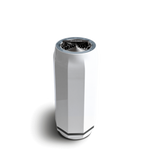
The Puraclenz Photon Air & Surface Purifier uses patented photocatalytic oxidation (PCO) technology. It is designed to generate ions that interact with certain airborne and exposed-surface pollutants, rather than relying solely on particles passing through a filter.
Photon features include:
- PCO technology designed for air and exposed-surface purification
- Coverage designed for spaces up to 3,000 square feet
- Countertop, wall-mount, or ceiling-mount placement options
- Five adjustable fan speeds and a four-hour Boost Mode
- A washable pre-filter for larger dust particles
- UL 2998 certification for zero-ozone emissions
In specific independent laboratory tests, Photon demonstrated a 95.1% reduction in airborne Aspergillus brasiliensis and a 99.75% reduction in surface Candida albicans. The latter is a yeast, not a mold. Both results reflect the stated test conditions and do not guarantee the same performance in every home.
Photon should complement, not replace, leak repairs, drying, mold cleanup, or professional remediation when needed.
8. Why Winter Indoor Air Quality Deserves Attention
Winter changes how homes manage air and moisture. Windows stay closed, heating systems run more often, and everyday activities continue producing humidity. Those changes can make condensation and hidden dampness easier to overlook.
Regular inspections, appropriate ventilation, prompt leak repairs, and humidity monitoring help reduce the conditions mold needs to grow. Air purification can be part of a broader indoor air quality plan, but moisture control must come first.
Frequently Asked Questions About Mold in Winter
Can mold grow in a cold house?
Yes. Mold can grow in a cold house when materials remain damp and conditions support growth. Freezing outdoor temperatures do not eliminate indoor humidity, condensation, or leaks.
Why does mold appear around windows in winter?
Warm, moist indoor air can condense on cold window glass and frames. If the moisture repeatedly collects and surfaces stay wet, mold can develop around sills and nearby materials.
What should indoor humidity be in winter?
The EPA recommends relative humidity below 60%, ideally 30%–50%. In very cold weather, a lower indoor humidity level may be needed to prevent condensation on windows and other cool surfaces.
Does turning up the heat prevent mold?
Not by itself. Heating may warm some surfaces and reduce condensation, but it does not directly remove moisture. Ventilation, humidity control, and repairs are still important.
Can an air purifier remove mold from a home?
Some air purifiers can help address certain airborne pollutants, depending on the technology and conditions. However, no air purifier can replace fixing moisture problems and cleaning up existing mold growth. Photon uses PCO technology and has shown reductions of specific microorganisms under laboratory test conditions.

Final Thoughts: Protect Your Home From Winter Moisture
Cold weather doesn't make mold concerns disappear. Condensation, limited ventilation, and hidden leaks can create damp indoor conditions long after summer ends.
Check moisture-prone areas regularly, keep indoor humidity under control, fix leaks promptly, and maintain appropriate ventilation. The Puraclenz Photon Air & Surface Purifier can complement these efforts as part of a broader indoor air quality routine.
Recommended products

Photon Air & Surface Purifier
$279.99
Recommended articles

