 Free Shipping
 2-Year Warranty
 30-Day Money Back Guarantee



Basement Air Quality Problems and How to Fix Them

Basements are one of the most common areas in a home where air quality declines first. Because they sit below ground level, they are constantly surrounded by soil that holds moisture. Limited sunlight, restricted airflow, and cooler temperatures create an environment where airborne pollutants can accumulate and linger. Over time, homeowners may begin noticing basement air quality problems such as damp air, a persistent musty basement smell, or visible signs of moisture damage.
While these issues often begin subtly, they can gradually affect the air throughout the entire home. Understanding why basement air quality problems develop and how to address them properly with solutions such as the Puraclenz Core and Photon is essential for long-term improvement.
Improve your basement air quality with the right purification strategy.
Why Basements Are More Vulnerable to Air Quality Issues
Unlike upper floors, basements are surrounded by porous concrete and soil. Groundwater pressure, seasonal rain, and humidity shifts allow moisture to migrate through foundation walls and floors. Even small cracks can introduce water vapor that increases indoor humidity levels.
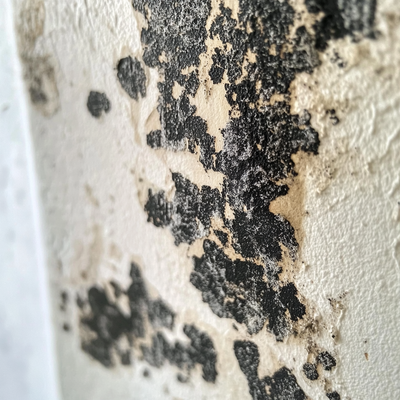
When humidity rises above 50 percent, conditions become favorable for mold 1 and mildew 1 growth. These organisms thrive in damp, dark environments and can develop on wood framing, drywall, insulation, cardboard boxes, and carpeting. As they grow, they release microscopic spores into the air, contributing to basement mold air concerns.
Air purification systems such as the Core address these challenges by combining high-efficiency filtration with PCO purification technology. Filtration captures airborne particles like mold 1 spores, bacteria 3, and allergens 4, while PCO purification helps reduce airborne pollutants circulating throughout the basement environment.
Because warm air naturally rises through a home in what is known as the stack effect, pollutants originating in the basement can circulate upstairs. That means basement air quality problems do not stay isolated below grade, they can influence bedrooms, living rooms, and shared spaces above. Running a Core or Photon in basement areas can help reduce airborne pollutants before they migrate through the home.

What Causes Musty Basement Smell?
A musty basement smell is typically one of the first warning signs homeowners notice. That odor is often linked to airborne mold spores and microbial volatile organic compounds released during active growth. Mildew growth on porous materials can also contribute to persistent odors.
In addition to mold 1, basements may accumulate bacteria 3, allergens 4 and fungal allergens 1. Dust and stored belongings can trap moisture, further increasing airborne particles. Without proper ventilation or purification, these pollutants can linger and recirculate.
Many homeowners ask, do air purifiers help with smell? When equipped with carbon filtration and advanced purification technology, systems such as the Core can help reduce odor molecules associated with musty basement smell while also reducing airborne pollutants through PCO purification.
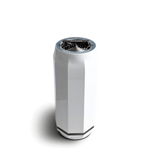
For basements where active purification is the primary focus, the Photon provides PCO purification technology in a compact and portable design. Depending on the basement environment, homeowners may choose the Core for filtration plus PCO purification or use the Photon when targeted PCO purification is the priority.
Common Signs of Basement Air Quality Problems
- Persistent musty basement smell
- Condensation on pipes or walls
- Damp or warped wood
- Discoloration on drywall or stored materials
- Increased dust accumulation
- Allergy-like reactions indoors
If these signs are present, it may indicate elevated airborne mold 1 spores, bacteria 3, or allergens 4 circulating within the basement air. Installing a Core can help capture airborne particles while also reducing pollutants through PCO purification. In some basement spaces, adding a Photon can provide additional active purification coverage.
Step 1: Control Moisture at the Source
Improving basement air quality begins with reducing excess moisture. Start by inspecting foundation walls for cracks and sealing any visible gaps. Ensure gutters and downspouts direct water away from the foundation. Grading around the home should slope away from exterior walls.
Using a dehumidifier can help maintain relative humidity between 40 and 50 percent. This range discourages mold 1 growth and reduces the release of airborne spores. In unfinished basements, vapor barriers may help limit moisture transfer from concrete surfaces.
Even with proper humidity control, combining moisture management with air purification systems such as the Core or Photon can help address airborne pollutants associated with basement air quality problems.
Step 2: Improve Air Circulation
Stagnant air allows pollutants to concentrate. If your basement lacks return air vents, consider consulting an HVAC professional to evaluate airflow balance. Running fans periodically can help prevent air from becoming trapped in corners or storage areas.
Air circulation works even more effectively when supported by continuous purification from the Core. In larger or multi-room basements, adding a Photon can provide additional PCO purification in areas where pollutants may accumulate.
Step 3: Use an Air Purifier Designed for Damp Environments
Many homeowners researching solutions search for an air purifier for mold because they want to address airborne spores directly. The best air purifier for mold should combine particle filtration with advanced purification technology.
The Core features HEPA filtration together with integrated PCO purification. This combination captures airborne mold 1 spores, bacteria 3 and allergens 4, while the PCO purification process helps reduce airborne pollutants circulating in the basement environment.
The Photon focuses on PCO purification in a compact, portable system designed for targeted treatment. In basements where filtration may not be necessary but active purification is desired, the Photon can help reduce airborne pollutants in localized spaces.
Depending on the type of basement air quality problems present, homeowners may choose the Core for combined filtration and PCO purification, or the Photon for dedicated PCO purification in smaller areas. Some basement layouts benefit from using both systems to improve overall air conditions.

Does an Air Purifier Help with Smell?
Does an air purifier help with smell? Yes, particularly when odors are caused by airborne contaminants rather than deeply saturated building materials. The carbon filtration within the Core helps reduce odor molecules, while the integrated PCO purification helps reduce airborne pollutants contributing to musty basement smell.
The Photon can also support odor reduction by reducing airborne pollutants through PCO purification. Using one or both systems depends on the type of pollutants present and the size of the basement environment.
Why Basement Air Quality Affects the Entire Home
Air naturally moves upward through small openings in floors, stairwells and ductwork. As a result, basement air quality problems can influence indoor conditions throughout the house. Airborne mold 1, bacteria 3, allergens 4 and fungal allergens 1 originating below grade can circulate into shared living spaces.
By addressing basement conditions proactively with structural moisture improvements and advanced purification systems like the Core and Photon, homeowners create a layered approach to managing airborne pollutants. When basement air is continuously purified, the entire home benefits.
Basement air quality problems are rarely caused by a single factor. Moisture, ventilation, and airborne contaminants all play a role. With proper attention and the right purification strategy using the Puraclenz Core and Photon, it is possible to significantly reduce musty basement smell and improve overall basement mold air conditions throughout the home.
Recommended products

Core Air & Surface Purifier + HEPA
$649.99

Photon Air & Surface Purifier
$399.99
Recommended articles

